Showing posts with label Visual Literacy. Show all posts

Wednesday, March 3, 2021

Writing With...Zen Pencils and A.P.J. Abdul Kalam

Zen Pencils is a must-need resource! I love it for so many reasons and here are a few:

1. Quotes turned into cartoons - These are short, visual pieces with so much to discuss. 
2. Critical thinking - There are so many things to discuss in these texts. There's the person who said the quote and learning about them, there's looking at how the quote is brought to life in the cartoon. There's using visual literacy to analyze. So great.
3. Translations - Many of the comics are translated into different languages. I teach dual language so I love that there are options in Spanish but there are also translations in Chinese, Farsi, Hindi, Kannada, Telugu, Polish, Russian, French, Portuguese, and Turkish.

Students and I have been talking about activism and studying activists. This week we're also talking about failure. As we are finishing this trimester, I asked students to reflect on this school year, how they feel about themselves as learners, what goals they have for themselves for the rest of the school year, and what steps they need to take to achieve those goals. I gave students an option to share in Flipgrid or in a Google Form. Now we're creating learning mascots (I'll share more about this next week!) and we're discussing what it means to fail versus what it means to be a failure. We'll then go back to our goals and use our learning mascots and our deeper thinking about failure to move us into trimester three. 

To get myself prepared for this discussion, I did a one minute word association about perfection and then I did a two minute word association looking at the difference between what it means to fail versus to be a failure. 

I'll be sharing this with my students today and inviting them to think about these as well. We do restorative justice circles and the topic today will be, "When is a time in your life when you failed? What happened afterwards and what did you learn?" Then we'll look at this Zen Pencils cartoon of Life's Pursuit A.P.J. Abdul Kalam and do a free write and then discuss in small groups. And after that, we'll go back to our goals (hopefully with renewed energy!) and connect this all with our learning mascots. 

A.P.J. Abdul Kalam was noted as saying: 

“If you fail, never give up
because F.A.I.L. means 'First Attempt In Learning'.
End is not the end, in fact E.N.D. means 'Effort Never Dies.'
If you get No as an answer,
remember N.O. means 'Next Opportunity', 
So let’s be positive.”

I'll be sharing this quote too. Woo hoo! I'm so energized for this. I'll share my slides and more details on this lesson in Patreon this weekend. And I'll share more about my learning mascot journey next week.

If you have a favorite Zen Pencils cartoon or go look through them and find one that stands out to you, I'd love to hear about which one it is and why! Please share in the comments. 

Wednesday, November 14, 2018

We Don't Eat Our Classmates

Title: We Don't Eat Our Classmates 
Author: Ryan T. Higgins 
Illustrator: Ryan T. Higgins 
Publisher: Disney Hyperion 
Publication Date: June 19th, 2018 
Genre/Format: Fiction/Picture Book
GoodReads Summary: It's the first day of school for Penelope Rex, and she can't wait to meet her classmates. But it's hard to make human friends when they're so darn delicious! That is, until Penelope gets a taste of her own medicine and finds she may not be at the top of the food chain after all. . . .
What I Think: When this book came out, Franki Sibberson asked me if I had read it because of our long discussions about I Want My Hat Back by Jon Klassen. Well, I finally got to reading this and I loved it. You can imagine what might happen when a t-rex goes to school! 
     I absolutely loved how the theme of this book look at how we treat others and how we hope to be treated. It's such a hard concept for kids to grasp and I find myself as a mom going over this again and again with my kids. This book offers a fresh look at this ever important lesson. 
     As a mentor text, I spotted the illustrations and the attention Ryan paid to the characters and their facial expression. They stood out because the story centers on Penelope but the children at school convey their own emotions about how the story is unfolding mostly through the looks on their faces. When I read with my kids, we were cracking up at the faces they were making. Kindergartners spend a lot of time drawing as writing and this extends into first and second grade...but it doesn't have to stop there. Any writer can use drawings to help flesh out their writing. In fact, when a writer draws, they have to show the character and the scene and this helps as they develop what they might include in their written text. Taking time to talk to young writers about their drawings is important. Often they draw happy faces or sad faces but there are so many other emotions they could show in their drawings. Looking at We Don't Eat Our Classmates through the lens of a writer who draws gives writers an opportunity to think about how to show emotion in their drawings. This is also an opportunity to talk about visual literacy when you ask students to stop and notice and discuss what they notice in the illustrations.
     This book would also make a great study for writers of any age who incorporate drawings or illustrations into their writing. 
Snatch of Text: 
When she got home, her dad asked about her first day of school. 

"I didn't make any friends!" Penelope cried. "None of the children wanted to play with me!"

"Penelope Rex," her father asked , "did you eat your classmates?"

"Well...maybe sort of just a little bit."

Sunday, August 12, 2018

Drawn Together

Title: Drawn Together
Author: Minh Le
Illustrator: Dan Santat
Publisher: Disney-Hyperion 
Publication Date: June 5th, 2018 
Genre/Format: Fiction/Picture Book 
GoodReads Summary: When a young boy visits his grandfather, their lack of a common language leads to confusion, frustration, and silence. But as they sit down to draw together, something magical happens-with a shared love of art and storytelling, the two form a bond that goes beyond words.

With spare, direct text by Minh LĂȘ and luminous illustrations by Caldecott Medalist Dan Santat, this stirring picture book about reaching across barriers will be cherished for years to come.

What I Think: Relationships with grandparents are special. My own kids adore their grandparents and I loved mine so much. I have memories of working in the garden and mowing the lawn with my grandpa, painting with my grandma, and playing cards with my other grandma. Each of them made me feel important. They showed me how to slow down and take my time and enjoy what I was doing. Drawn Together felt so true to me because my grandmother Mamita spoke Spanish and barely knew English. I learned most of my Spanish from her but there were still so many times when I struggled to express myself accurately to her or failed to understand what she was trying to say to me. Especially her jokes. She loved to recite poetry, sing songs, and tell stories and jokes. Jokes involve complex language which made them so hard to understand. I wish I could have better understood everything she ever said to me...but the reality is that I couldn't. It's hard to explain the heartbreak of this reality but in Drawn Together, Minh Le and Dan Santat bring this feeling to life. 
     While not everyone has the same experience with a language barrier with their grandparent, I wonder if many will still identify with the idea of misunderstanding each other in some way or another. In any relationship, there are so many ways to misunderstand each other. We can feel close and still feel so far away at the same time. 
     As a mentor text, Drawn Together can be used to spark conversations about relationships. It offers an opportunity for students to think about their own relationships and whether they recognize similarities in their own relationships or not. It's also a chance to think about how things like language differences might make growing a relationship difficult and whether there might be ways to overcome this. Student writers can then think about what relationships look like in their own writing and think about how things like language differences might impact the characters or people in their writing. 
     This book relies heavily on the illustrations to tell the story with the text. It's not a wordless picture book but there are several layouts without any text. I love books like this because they make it easy to focus on visual literacy. As a mentor text, readers can think about how they might describe what is happening in the illustrations and how to show this in their writing. It's a powerful way to link reading and writing. 
    Drawn Together is an absolutely beautiful book that everyone needs to read.
Snatch of Text:
"All the things we could never say come pouring out...
...and we build a new world that even words can't describe."

Wednesday, December 13, 2017

For the Love of Mentor Texts - Teddy Kuhn


Welcome to another guest post in my series For The Love of Mentor Texts here at Teach Mentor Texts. I love to talk about the power of mentor texts to impact our writing but I'm thrilled to have friends share how they use mentor texts for a fresh perspective. Today I'm excited to welcome Teddy Kuhn to to share how she uses cartoons to inspire students to write.

Would you like to write a guest post for For The Love of Mentor Texts? Just let me know by filling out this simple form

*********************************

Elaborating with Cartoons as Mentor Texts

Students can give opinions all day long, usually very strong and sometimes logical opinions.  The point is opinions are natural for humans, we grow up being asked; what’s your favorite? What’s the best? Was that scary? Funny?  So why is it in argumentative essays student writing often feels flat and bland?  If you’re like me, you’ve read thousands of essays where students’ arguments are simple repetitions of an opinion.   And if you’re like me, you write on the paper, “Why?” and “What does this show?” and “Tell me more about this.”


Finally, you get to the end of the stack and instead of being relieved they’re all graded, you’re frustrated because no matter how many times deepening questions have been written, or written “TELL ME MORE”, students just don’t “TELL ME MORE”.  So it finally dawned on me (It took a while) that maybe students don’t know HOW to tell me more or what could be said.  It was time to start really thinking about what elaboration is and what it does because it is more than just more.  


In the early days I began with comic strips straight from the funny pages of the newspaper.  I gave kids a copy, let them read, listen to some giggles and asked “Is this funny?”


We practiced this a lot, with a lot of cartoons, it’s quick and students like it.  Best of all it did help with their writing.  However, with Common Core the standards for argumentative writing became more rigorous and more defined than they previously had.  I needed to step my strategy up, because even though it helped students see what elaboration looks like, it didn’t help them understand what it truly does.  


That’s when George Hillock, Jr’s book Teaching Argument Writing truly saved the day, week, unit, all of it.  This is really a remarkable book! It has become one of my staple professional development books.  Hillocks helped me really understand the components of argument writing and how they work together.  The book helped solidify what I knew, taught me the new language of CCSS and gave me the tools to actually teach it.  LOVE, LOVE this book, find a copy!


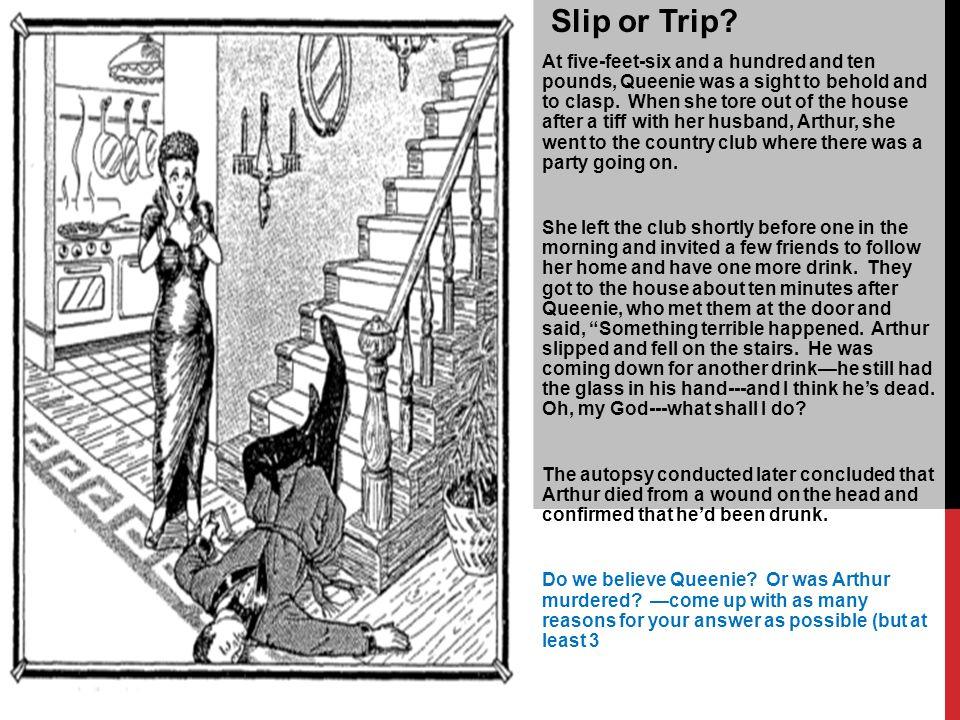
Anyways, Hillocks suggests using crime scene cartoons! (Is there anything more satisfying than finding out you were on the right track??) I use Lawrence Treat’s Crime and Puzzlement, each cartoon in this book comes with a brief story that includes more clues.  Share it with students and simply ask, “What happened? Was this an accident?” As students begin developing theories guide them to the picture and ask, “How can you tell?” This time when students are asked for more, I was really asking for a comparison. Students are really answering, “How does this compare to what you know about the world?”


Suddenly their answers will include ideas about how this evidence shows it couldn’t have been an accident because it would be impossible to occur naturally.  And, almost like magic, students are answering, “why?” and “telling me more” using logic, warrants and reasoning, even if they don’t know it yet!  I’ll later use these cartoons and conversations to define the key elements of argument writing.  Students are more likely to transfer this elaboration when they know exactly what that element is, does and sounds like.


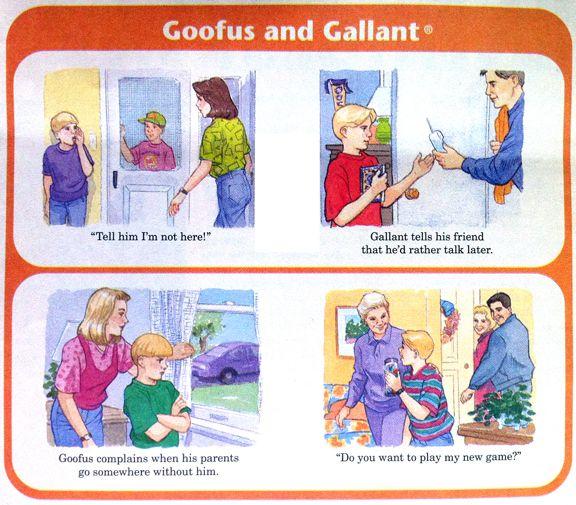
Unfortunately, if you do teach younger students these cartoons aren’t appropriate.  I recommend the classic Goofus and Galant cartoons. Ask students which character is doing the right thing and which is doing the wrong.  Then, to encourage elaboration and reasoning, ask students, “How do you know that’s the right thing to do?” Students’ answers will include their experiences and values in comparison with the characters, so even at a young age the elaboration and reasoning muscles are being strengthened!


I recently discovered Zen Pencils and love how they are taking inspirational or thought-provoking quotes and turning them into cartoons. It really brings them to life and helps give readers another lens to consider as they discuss. If you aren't familiar with this site, I definitely recommend it as well.


A big thank you to Teddy for taking the time to share her love of mentor texts!

It’s Monday! What Are You Reading? 08/28/2023

  It’s Monday! What Are You Reading? From Picture Books to YA!   It's Monday! What are you Reading? is a weekly blog hop hosted by Kelle...