Showing posts with label Point of View. Show all posts

Thursday, September 10, 2015

Goodbye Stranger

Title: Goodbye Stranger 
Author: Rebecca Stead 
Publisher: Wendy Lamb Books 
Publication Date: August 4th, 2015 
Genre/Format: Realistic Fiction/Novel 
GoodReads Summary: Bridge is an accident survivor who's wondering why she's still alive. Emily has new curves and an almost-boyfriend who wants a certain kind of picture. Tabitha sees through everybody's games--or so she tells the world. The three girls are best friends with one rule: No fighting. Can it get them through seventh grade? 
This year everything is different for Sherm Russo as he gets to know Bridge Barsamian. What does it mean to fall for a girl--as a friend? On Valentine's Day, an unnamed high school girl struggles with a betrayal. How long can she hide in plain sight? 
What I Think: I'm sure the characters in this book are going to be with me for a long time. I especially love how the girls go through some tough situations and how their relationship evolves throughout the story. I'm trying to put my finger on exactly what stands out to me about this story but the most I can come up with is that they seem so real and they also seem like friends I would have wanted to have in middle school. Actually, as a mentor text, that's what I would look at with Goodbye Stranger. I would ask students to think about all the everyday moments in this book but how Stead slows them down, captures them succinctly but accurately, and makes the reader feel like he or she is there with them. There's something so honest and down-to-earth about her description that it feels so real.
     Another part of Stead's craft that I admire is her ability to thread together so many different storylines without losing the reader or spending time on irrelevant information. It reminds me of Jenny Han's To All The Boys I've Loved Before because every word is well-placed and critical to the story. I can definitely see this as a book for a mother-daughter book club or as a text to anchor a discussion around digital citizenship and making safe choices when using technology.
     One of the storylines in Goodbye Stranger is told in second person. It was hard for me to get used to but I loved it at the same time. As a reader, it was so different to read about a character in this way. I could definitely identify with him/her but it was hard not actually truly knowing his or her name. Most of the time in school we tell students not to use the 2nd person but this is an example of when it works really well because the author did it intentionally and with a very specific purpose.
Read Together: Grades 6 - 8 
Read Alone: Grades 6 - 10 
Read With: In Real Life by Cory Doctorow and Jen Wang, Sisterhood of the Traveling Pants by Ann Brashares, To All The Boys I've Loved Before (series) by Jenny Han, Drama by Raina Telgemeier, See You At Harry's by Jo Knowles 
Snatch of Text: 
     "On the first day of October, Emily got a text from a boy asking for a picture.
     'Same boy,' Em said. 'That eighth grader. His name is Patrick. Very cute, actually. And he plays soccer.' They were sitting against the fence after Emily's second win.
     'A picture of what?' Tab asked, pulling at the dry grass. She was stirring up dust that made Bridge want to sneeze.
     Emily laughed. 'It doesn't matter. I'm not doing it.'
     'Send him a picture of your feet,' Bridge suggested.
     And so Emily took a picture of her dirt-covered soccer cleats and texted it to Patrick.
     Ten seconds later, he texted Emily a picture of his sneakers.
     'Ha,' Emily said, shoving her phone into her bag. 'He thinks he's funny.'" (p. 19)
Writing Prompts: Write about a time in your life when you felt like a friend was making a bad decision and you wanted to help him or her. What did you do? Would you have done anything differently? 
Topics Covered: Family, Friendships, Loyalty, Relationships, Integration - Technology, Decision Making, Courage 
I *heart* It:

Thursday, December 4, 2014

Louise Loves Art

Title: Louise Loves Art 
Author: Kelly Light  
Illustrator: Kelly Light 
Publisher: Balzer + Bray 
Publication Date: September 9th, 2014 
Genre/Format: Realistic Fiction/Picture Book 
GoodReads Summary: For fans of Olivia and Eloise, this stunning debut from Kelly Light is an irresistible story about the importance of creativity in all its forms.

Meet Louise. Louise loves art more than anything. It's her imagination on the outside. She is determined to create a masterpiece—her pièce de résistance!

Louise also loves Art, her little brother. This is their story.
Louise Loves Art is a celebration of the brilliant artist who resides in all of us.  
What I Think:  
We've had so much fun with Louise Loves Art in our house! We read this in November during Picture Book Month and I tried my best to grab book pics with my wild and crazy kids. 
We loved watching Art follow Louise around and were just waiting for her to find out what he was up to. Having a little brother or sister can be complicated but Louise gave us an opportunity to talk about that. Little Bean is constantly wanting to be like his older brother but it's hard for Peanut to see that. It was nice to be able to talk about Louise and how she reacted to her little brother in this book.

One character we absolutely love is their cat. That cat is awesome! It follows them around, knowing all the time what's going on and trying to help bring the siblings together. That little cat has some pretty amazing expressions. I'm not sure I've ever seen a more expressive cat before. It was fun to imagine what words would come out of the cat's mouth if it could talk. As a mentor text, this is a great opportunity to talk about personification and dialogue. Here students can see that the cat isn't able to talk and doesn't in the book, but what if we personified the cat and gave it the ability to talk? What might the cat say? This is also an opportunity to look at dialogue. What I love about dialogue is that it gives us access to the character who is talking but also to the other characters as well. What might the cat say that would reveal something about what it's thinking? What might the cat say that would reveal something about Louise and Art? Has this happened before? Has Louise had a chance to practice some patience before, too? This is a great time to talk about characters and how dialogue can play a role in developing characters.

And what I completely, totally, utterly love about this book is that it reminds us to let free our inner artist. Growing up, I painted a lot with my grandmother and my aunt but I also did all sorts of arts and crafts. I still consider myself to be very creative and love how my artsy side has evolved over the years. I write more than practice any other kind of art but I do love colors and design and painting in the backyard with my kids. Louise Loves Art reminds us that we have imaginations that we can bring to life and that our art is worth sharing. At home or at school, kids can put on their own art show, hanging up their work and inviting others to come and admire it. What a great way to celebrate art and share what kids - and maybe adults? - have created!

Read Together: Grades Pre-K - 3 
Read Alone: Grades Pre-K - 5 
Read With: Bink and Gollie (series) by Kate DiCamillo and Allison McGhee, Sam and Dave Dig a Hole by Mac Barnett, Chloe Instead by Micah Player, One Cool Friend by Toni Buzzeo, The Dot by Peter H. Reynolds
Snatch of Text:  
"I love art!
It's my imagination on the outside."

"I've done it.
So fierce! So feline! So fantastic...
a masterpiece!"
Reading Strategies to Practice: Activating Background Knowledge, Making Connections, Making Predictions, Making Inferences 
Writing Strategies to Practice: Dialogue, Characterization,  $100 Words, Personification, Point of view, Perspective
Writing Prompts: Imagine you are the cat in the story. What do you think the cat might think or say to Louise and/or Art? Think about how dialogue shows the reader about the characters. 
Topics Covered: Family, Integration - Art, Self Esteem, Determination, Forgiveness 
I *heart* It:

Saturday, November 1, 2014

Ninja!

November is Picture Book Month! I'm rocking out a Bookaday celebration of picture books!

Today I'm sharing ideas for using Ninja! by Arree Chung as a mentor text.

GoodReads Summary:
A ninja must be strong, courageous, and silent! He creeps through the house on a secret mission. There may be obstacles! But have no fear—a true ninja can overcome all challenges.
We really took our time looking at the pictures in this book! There were many pages with multiple panels and sometimes we even found ourselves going back forth between pages to make sure we knew what was happening. I've got some adventurous little dudes in my house so we know all about ninja-type moves around the house!
Here are some literacy ideas to go along with Ninja! by Arree Chung!

1. Since we spent a lot of time on the pictures in this book, I think it makes a great mentor text for close reading with young students. Close reading doesn't have to just be passages of text, it's totally cool to close read illustrations in a book. Illustrations in picture books are an integral part of telling the story so it's important to know that the illustrations and the text should work together. I might stop and ask students to describe what they see in the different panels. This could be a shared group activity or each student could write an idea on a sticky note and put it into the book.

(Side note - I will never ever forget taking Peanut to a story time where a teenager read Green Eggs and Ham by Dr. Seuss to the kids. She skipped all the pages at the beginning when Sam is going by with his sign and just started where the words start! I was shocked but it was a good reminder to me that we have to model and show students how important it is to read more than only the words.)

2. There are a few places especially where a lot of action is happening and it might be a great opportunity to think about some super descriptive verbs - verbs that pack punch! I love talking about how we can put words on a continuum. You can take the word jump and brainstorm synonyms and then put them on a continuum, stacking the words so that the less intense words are at the bottom and then the words increase up to the top. So for jump, you might have hop at the very bottom and then a whole range of synonyms for jump all the way up to bound.

3. When you read Ninja!, you'll find that there is another character other than our little super-sneaky friend. She's a bit of a surprise and there is a little suspense until we know if she'll be an ally to our young warrior or not...and it would be a great exercise in point or view or perspective for students to try and tell her her side of the story. Oh! There is one more minor character...can you find her? And what might her side of the story be?

Read With: 
Dog in Charge by Dan Santat
Comics Squad: Recess! edited by Jennifer and Matthew Holm and Jarrett Krosoczka
I would so recommend reading Dog in Charge by Dan Santat in conjunction with Ninja! because of the similar style of story-telling. Dan Santat also uses panels and gives students an opportunity to read the pictures. 

As soon as we opened up the front cover of Ninja! and read about how a ninja must be super sneaky, it reminded me of "The Super Secret Ninja Club" by Gene Yang in Comics Squad: Recess! I've read that story and over and over and over and I love the connection between the two in terms of thinking about what a ninja has to be skilled at. This might lead to some research and reading of informational text to learn more about being a ninja.

Wednesday, September 17, 2014

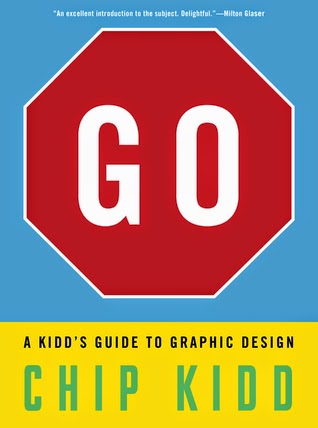
Go: A Kidd's Guide to Graphic Design


Nonfiction Picture Book Wednesday is hosted by Aly at Kid Lit Frenzy. 
Every Wednesday, bloggers link up their non-fiction picture book reviews. Be sure to visit Kid Lit Frenzy and see what great non-fiction books are shared this week!


Title: Go: A Kidd's Guide to Graphic Design
Author: Chip Kidd
Publisher: Workman Publishing Company
Publication Date: October 8th 2013
Genre/Format: Non-Fiction/Picture Book
GoodReads Summary: “An excellent introduction to graphic design through [the author’s] own excellent work. Anyone interested in the subject, including most practitioners, will find it delightful.”—Milton Glaser

Kids love to express themselves, and are designers by nature whether making posters for school, deciding what to hang in their rooms, or creating personalized notebook covers. Go, by the award-winning graphic designer Chip Kidd, is a stunning introduction to the ways in which a designer communicates his or her ideas to the world. It s written and designed just for those curious kids, not to mention their savvy parents, who want to learn the secret of how to make things dynamic and interesting.

Chip Kidd is the closest thing to a rock star in the design world (USA Today), and in Go he explains not just the elements of design, including form, line, color, scale, typography, and more, but most important, how to use those elements in creative ways. Like putting the word go on a stop sign, Go is all about shaking things up and kids will love its playful spirit and belief that the world looks better when you look at it differently. He writes about scale: When a picture looks good small, don t stop there see how it looks when it s really small. Or really big. He explains the difference between vertical lines and horizontal lines. The effect of cropping a picture to make it beautiful or, cropping it even more to make it mysterious and compelling. How different colors signify different moods. The art of typography, including serifs and sans serifs, kerning and leading.

The book ends with ten projects, including an invitation to share your designs at GoTheBook.com

What I Think: I absolutely love this book. I found it fascinating from beginning to end. Design thinking has been on my mind since I participated in Understanding by Design training in July. As I've been talking to more and more people this year about blogging, I find myself telling them that they can set up a simple blog and that I've been working on mine, tweaking the design, moving things around, changing the layout and the theme for a long time now. My blog has evolved over time and I've had fun tinkering with it. I've been working on a website for a couple months now and I haven't made it live yet because I'm not happy with what it looks like and how it represents me just yet. 
     This book helped me see and name some of the thoughts that go through my head as I've worked on my blog and website but I also notice this extends into my writing as well. I saw a great example of varying sentences the other day on Twitter. It showed a version of a paragraph with the sentences basically saying the same thing with sentences of similar structure and then a paragraph with sentences of similar content but with varying sentence structure to show how much more lyrical it is. As writers we design with words and I think that's what makes it an art.
     I honestly could go on and on about this book, what I learned and how it made me think. There were definitely some new design ideas that I'm looking forward to trying. I love that there are ideas here that gave me a concrete way to be creative. So often creativity seems abstract and innate but this book made it feel like it's possible to learn to be creative and I think that might be a relief to some students.
     As a mentor text, I grabbed a snatch of text from the very beginning when the author is talking to the reader. Looking closely at attention grabbers or hooks in non-fiction writing is so much fun. Kidd doesn't disappoint. I really enjoy how he uses 2nd person. It's not very often that 2nd person is used but I think it's a great example of how to hook a reader. I listed a few other books that use 2nd person and/or have great hooks as books that would match well with this.
     One more thing...at the end of this book, there is a great extension for students. After reading about all of the design ideas outlined in the book, Kidd offers some projects that students can try. Bonus!
Read Together: Grades 3 - 12
Read Alone: Grades 4 - 12
Read With: Extreme Earth by Seymour Simon, Locomotive by Brian Floca, Choose Your Own Adventure books
Snatch of Text:
"CONGRAT-
ULATIONS,
you have decided to open 
this book, even though you 
have no idea what it's about 
because the cover doesn't 
tell you much. In fact, the 
cover is weird and seem-
ingly at cross-purposes 
with the message and pos-
sibly even a bit pretentious. 
But you opened it anyway."
Writing Prompts: Complete one of the projects at the end of the book and then write about what you thought about as you completed the project and how you felt about being a designer.
Topics Covered: Integration - Art, Creativity, Intentionality, Purposefulness, Motivation, Belief
I *heart* It:
 

Friday, December 20, 2013

Two Boys Kissing

Title: Two Boys Kissing 
Author: David Levithan 
Publisher: Knopf Books for Young Readers 
Publication Date: August, 2013 
Genre/Format: Realistic Fiction/Novel 
GoodReads Summary: New York Times  bestselling author David Levithan tells the based-on-true-events story of Harry and Craig, two 17-year-olds who are about to take part in a 32-hour marathon of kissing to set a new Guinness World Record—all of which is narrated by a Greek Chorus of the generation of gay men lost to AIDS. 

While the two increasingly dehydrated and sleep-deprived boys are locking lips, they become a focal point in the lives of other teen boys dealing with languishing long-term relationships, coming out, navigating gender identity, and falling deeper into the digital rabbit hole of gay hookup sites—all while the kissing former couple tries to figure out their own feelings for each other. 
What I Think: Just when I think David Levithan is as amazing as he can be, he goes and writes another book and knocks my socks off. In Two Boys Kissing, he's able to be poignant and relevant at the same time. I'm not sure what it's like to be in the head of a gay male teenager these days, or ever, but I feel that I can better empathize after reading this book. I believe David captures so many raw emotions as he describes his characters and their situations.
     I wasn't sure how anyone could get more creative with narrators and points of view in a story after Every Day, but again David is able to show us how. This book is a blend of hearing from what I interpret as spirits past of gay men and the handful of characters in the present. In rereading the GoodReads summary above, I don't think it does justice to the gravity held within the pages of Two Boys Kissing. Alternating between the spirits and then each of the different characters in the book, we are able to see the highs and lows and all the emotions in between that they experience and how the spirits relate to them. The spirits are there to acknowledge the characters and how they are feeling and it made me realize more than ever how lonely it might feel to not only be a teenager and establishing one's identity but to also be navigating being gay in today's world. By including the spirits as a narrator in the story, David is able to address feelings and issues without seeming didactic. I actually loved some of those parts the most. I listened to the book on audio and I found myself starting tracks over and over again to truly let the words resonate.
     The juxtaposition of the characters in present time and the spirits in Two Boys Kissing makes me recognize how awesome would it be if all kids/teens had mentors. I believe every child should have supportive adults who believe in him or her. While those adults can definitely be family members, a non-family member can be a significant mentor and cheerleader as well. Can you just imagine if every teen could have a mentor like David? Someone to help him or her not feel alone in his or her feelings? A couple years ago, I heard Steven Layne speak about balcony people. Your balcony people are those people who have impacted your life in a small or big way but ultimately have changed your life. He calls them our personal cheerleaders. I love this image of people watching over us and applauding from the balcony. I know there are so many people in my own balcony and it breaks my heart to think that some of our students don't have enough people in their balconies.
     After reading this book I have a more heightened awareness of how critical it is that we are attuned to all of our students but especially to our LGBTQ students. Maybe they need someone to listen, maybe they need someone to address homophobic remarks, maybe they need help finding books like Two Boys Kissing. I'm so glad we have this book and see how it is a necessary read for adults and teens alike.
Read Together: Grades 9 - 12   
Read Alone: Grades 9 - 12 
Read With: Every Day and Boy Meets Boy by David Levithan, Will Grayson, Will Grayson by David Levithan and John Green, Twisted by Laurie Halse Anderson, The Perks of Being a Wallflower by Stephen Chbosky, Aristotle and Dante Discover the Secrets of the Universe by Benjamin Alire Saenz, Dear Bully edited by Megan Kelley Hall and Carrie Jones, Girl Meets Boy edited by Kelly Milner Halls
Snatch of Text:  
     "There is nothing so heartening as a chance." (p. 30)

     "'With some people, the minute you start talking, it feels like you've known them for years. It only means that you were supposed to meet sooner. You're feeling all the time you should've known each other, but didn't. That time still counts. You can definitely feel it.'" (Caitlin, p. 87)  

"This is what we don't admit about first kisses: One of the most gratifying things about them is that they are proof, actual proof, that the other person wants to kiss us.
     We are desirable. We desire.
     Every kiss that matters contains a recognition at its core." (p. 94)
Reading Strategies to Practice: Activating Background Knowledge, Making Connections 
Writing Strategies to Practice: Point of View, Alternating Characters, Characterization, Description, Personal Narrative, Metaphor, Word Choice, Author's Purpose, Oxymoron 
Writing Prompts: Choose a person in your life and write about the relationship that you have with that person. How did it start? How long have you known each other? What do you have in common? How do you differ? What do you think contributes to your relationship - whether it works or doesn't? 
Topics Covered: Relationships, Friendship, Love, Family, Identity, Honesty, Loyalty, Self Confidence, Self Esteem, Hope 
I *heart* It:

Sunday, November 24, 2013

Locomotive


Nonfiction Picture Book Wednesday

Nonfiction Picture Book Wednesday is hosted by Kid Lit Frenzy. 
Every Wednesday, I'll review a non-fiction picture book. (It may not always be a picture book.) Be sure to visit Kid Lit Frenzy and see what other non-fiction books are shared this week!

Title: Locomotive 
Author: Brian Floca 
Illustrator: Brian Floca 
PublisherAtheneum/Richard Jackson Books 
Publication Date: September, 2013 
Genre/Format: Non-Fiction/Picture Book 
GoodReads Summary: All aboard! From the creator of the "stunning" (BooklistMoonshot, a rich and detailed sensory exploration of America's early railroads.
It is the summer of 1869, and trains, crews, and family are traveling together, riding America's brand-new transcontinental railroad. These pages come alive with the details of the trip and the sounds, speed, and strength of the mighty locomotives; the work that keeps them moving; and the thrill of travel from plains to mountain to ocean.
Come hear the hiss of the steam, feel the heat of the engine, watch the landscape race by. Come ride the rails, come cross the young country!  
What I Think: I'm fascinated by Brian Floca's ability to capture a moment in time and describe it so that it feels like we are living in that one moment...walking around and examining every piece of it before you unfreeze that moment and life goes on.
     What I found most interesting about this book is that it's written in 2nd person voice. Throughout the book, the narrator is talking to "you" and it feels like the reader is literally in the book, smelling, seeing, hearing the sights and sounds, climbing on board the train and heading across the country. This book is a great mentor text for descriptive writing. Students have many opportunities to look at the author's craft and to discuss what he is doing. It's also a great opportunity to look at commas and when we use commas. Using this text, you might have a conversation about what comma rules we have and when we can break those rules. There are definitely different types of comma usage here though and we could take the time to notice what patterns we see as we read.
Read Together: Grades 2 - 12 
Read Alone: Grades 2 - 12  
Read With: Moonshot by Brian Floca, Train by Elisha Cooper, How To Train A Train by Jason Carter Eaton
Snatch of Text:  
"The hours and and miles roll by.

The country opens,
opens wide,
empty as an ocean.

Smell the switchgrass and the blustem,
hot beneath the sun.

Here the bison used to roam,
by the hundreds, by the millions.

Here the Cheyenne lived,
and Pawnee and Arapabo.

Here covered wagons used to crawl,
foot by foot, mile by mile,
heading into the West.
Reading Strategies to Practice: Activating Background Knowledge, Visualizing, Making Connections, Asking Questions 
Writing Strategies to Practice: Personal Narrative, Descriptive, Point of View - 2nd Person, Anaphora, Simile, Comma - Appositives, Word Choice, $100 Words, Alliteration, Author's Craft 
Writing Prompts: Write about a time in your life when you took a trip - describe the "getting there" part of your travels. Write about how you get from one place to another - maybe from your desk to the library, from your locker to the bus, etc. Write from the perspective of an object and how it moves along during the day, describe what it might see or experience through the course of a day.  
Topics Covered: Travel, History, Integration - Social Studies 
I *heart* It:

Tuesday, June 11, 2013

Campfire Crisis

Title: Campfire Crisis     
Author: Blake Hoena  
Publisher: Lake 7 Creative 
Publication Date: April 15, 2013
Genre/Format: Realistic Fiction/Choose Your Adventure 
GoodReads Summary: What's better than reading an outdoors adventure? Reading one where you are the main character! But be careful: You might find yourself in a forest fire! Your decisions will help you learn camping safety tips while you rescue your friends.
What Jen Thinks: I have always thought there needed to be more choose-your-own-adventure books in the world. I remember reading the R.A. Montgomery books when I was younger and loving them. One thing that was very different about this chose-your-adventure type book compared to others that I have read, is that readers are given a choice at the end of every chapter. Your choice doesn't mean that you will jump around in the book, the reader still reads through the chapters but is given a choice at the end of each. The author helps readers recognize when he or she has made a decision that would not be wise and then the reader is made aware of this and is able to instead make the opposite choice. Because this format is so unique compared to what I have read before, it made me stop and think about what I'm used to and why the author made the decisions he did about how to format this particular book. This would be a wonderful conversation to have with students about decisions an author makes and why or why not he or she might make those decisions. It would be interesting to hear how students respond to different types of choices they are given.
     Similarly, choose-your-adventure books are unique because they are usually told form a 2nd person point of view. 2nd person seems to be altogether rare in writing and I think it is often overlooked when point of view is taught to students. I love that books like Campfire Crisis give students the opportunity to recognize what 2nd person point of view is and how it is different from 1st and 3rd person. (I totally remember wondering what 2nd person point of view meant because if you had 1st and 3rd, why wouldn't you have 2nd?) I strongly believe in giving kids all the information and helping them discern for themselves why you may or may not use a point of view and why it may or may not be more common than others. Overall, I think students will learn a lot about camping and survival by reading this book but can also examine an author's decisions and discuss how those decisions might apply in their own writing.
What Kellee Thinks: A different kind of choose your path book. In a choice chapter book, you are still the protagonist (2nd person alert!), but throughout the book you are given choices (one is right and one is wrong; rational is given) and you only continue when you choose the right one. This book definitely would be a great introduction to camping and takes the reader through some really realistic situations. Though a bit didactical, it definitely works in teaching safety- I even learned a few things.
     In the classroom, this book would be great in a 2nd or 3rd grade classroom to talk about cause and effect. You could look at what would happen if you chose the wrong choice. 
     I cannot wait to see what other books come out in this series. I think it is a great opportunity to teach readers about many different things in a fun way. 
Read Together: Grades 2 - 4 
Read Alone: Grades 2 - 5 
Read With: Can You Survive: Jack London's Call of the Wild: A Choose Your Path Book by Ryan Jacobson, Any Choose Your Own Adventure books
Snatch of Text:  
Choice 1 "The hand-crank radio: You tell Carla to pack her radio. Good choice! It doesn't have any games, but it will always have power. You just crank its lever. Then you can listen to music. You can also get weather reports if it looks stormy outside." 
Choice 2 "The smart phone: You tell Carla to pack her phone. It would be fun to play games. But the phone will run out of power. You won't be able to recharge it. And what if a storm comes? You might need to hear weather reports. You should tell Carla to pack the radio instead." 
Mentor Text For: Point of View, Perspective, Author's Purpose, Cause/Effect 
Writing Prompts: Write about a time in your life when you had to make a tough decision.; Were there any decisions withing Campfire Crisis that you disagreed with? If so, what would you have done differently? 
Topics Covered: Friends, Family, Independence, Decision Making, Risk Taking 
We *heart* It:
and
**Thank you to the author, Blake Hoena, for providing copies for us to review!**

Tuesday, May 7, 2013

Paperboy

Title:  Paperboy
Author: Vince Vawter 
Publisher:  Delacorte Books for Young Readers
Publication Date:  May 14, 2013
Genre/Format:  Historical Fiction/Novel
GoodReads Summary:  An 11-year-old boy living in Memphis in 1959 throws the meanest fastball in town, but talking is a whole different ball game. He can barely say a word without stuttering, not even his own name. So when he takes over his best friend's paper route for the month of July, he knows he'll be forced to communicate with the different customers, including a housewife who drinks too much and a retired merchant marine who seems to know just about everything. 
     The paper route poses challenges, but it's a run-in with the neighborhood junkman, a bully and thief, that stirs up real trouble--and puts the boy's life, as well as that of his family's devoted housekeeper, in danger.
What Jen Thinks: This year on American Idol, one of the top finalists was a guy named Lazaro Arbos, who has a stutter. He takes a long time to produce words when he is talking but when he is singing, the words come out beautifully. I loved watching him progress through the competition and to hear his story. At one point, Lazarro shared how difficult it can be for someone with a stutter to make and friendships. It really touched my heart and I found myself making connections between Lazaro and the main character in this book. I'm currently listening to the book Quiet by Susan Cain and that is giving me a totally different perspective on introverts and personalities in general. Throughout the book, I thought so much about how a stutter really impacts who you want to be and what you can do in life. I found myself thinking of Mattie from Hound Dog True by Linda Urban. Mattie is painfully shy and in a way she reminded me of the main character in Paperboy.
     I really enjoyed Vince's descriptions in this book. As a mentor text, it would be great for kids to look at how he describes while not simply telling the reader about what is happening. He uses clues about what might be happening at a certain moment or place and describes what is going on in a scene to show more about what is happening. I especially love the snatch of text below where he describes dusk. I can exactly visualize that time of night when you really start to notice bugs hanging around. When you all of a sudden realize the sun has almost disappeared and you can't really see what's going on around you any more. I love how this simple snatch of text can be an example of how how kids can describe in their writing. 
What Kellee Thinks: I found this book fascinating. It dealt with many different topics from stuttering to racism in the South and definitely shows the power of others in helping a young person find his/her voice (and in this book, that is a literal statement). I loved how it was written because although our narrator wasn't very vocal in his life, he loved writing and found his voice through his writing. It is through this art that he is able to tell his story. It is also quite interesting that though he is writing his story, he withholds his name until the very end because he has trouble saying it himself. He is referred to mostly as "Little Man" throughout the book. 
     But, by far, my favorite thing about this story is all of the characters our narrator gets involved with when he begins his paper route. First is Little Man's first crush, a pretty young wife who likes to drink and who Little Man cannot figure out. Second is a homeless man who bullies Little Man out of some of his possessions and is haunted by his past. Third, and most importantly, is a Merchant Marine who shows Little Man that there is more out there and that he can be whomever he wants to be. It is through these different adults that our narrator really starts to become his own. 
     In the classroom, this book would be a great discussion start about many different topics. Since it is historical, it gives a different perspective into many different topics including television and racism. Vawter also writes this novel with a great voice and makes interesting choices with punctuation that would be interesting to talk to students about. 
Read Together: Grades 6 - 8 
Read Alone: Grades 6 - 8 
Read With:  Out of My Mind by Sharon Draper, Wonder by RJ Palacio, Okay For Now by Gary Schmidt, The Dreamer by Pam Munoz Ryan, Lions of Little Rock by Kristin Levine, Hound Dog True by Linda Urba
Snatch of Text: 
"The streets are like friends I don't have to talk to." (p. 11)

"I didn't know what time it was but I knew I was going to have a tough time beating it home by seven o'clock. It wasn't pitch-dark yet but more flies were swarming around the porch light and a few lightning bugs were warming up out in the yard for a big Friday night in Memphis." (p. 33)

     "I didn't have to think too long because I had wanted to see the inside of Mr. Spiro's house all along. I was nervous but not from knowing I might have to say something. The nervousness came from being excited just like before the first pitch of a ball game.
     The house was not going to be like my house. I was sure of that. But I didn't know what to expect. Never in a gazillion years could I have guessed what I was going to see.
     Books. Hundreds. Thousands. Wall to wall. Floor to ceiling." (p. 101-102)

"I wish I had a book
That did not have an end.
I go to pick it up
And it is new again.

The words feel real 
And mine to share.
The have no sound.
They have no air.

My voice is clear
And lets me speak
My fear is gone
I'm never weak.

My words all come
And right on time.
The words are true
The words are mine."
(p. 108-109)
Mentor Text For:  Voice, First Person Point of View, Grammar, Simile, Making Predictions, Contractions (p. 30), Poetry (p. 108-109), Descriptive, Personal Narrative
Writing Prompts:  There are some unexpected players in this young boy's life that he would have never thought would affect him the way they did. Think of someone in your life that you thank for helping, influencing, or changing you and write them a thank you letter. 
Topics Covered: Candide, Voltaire, Speech Pathology, Baseball, Alcoholism, Anxiety, Infidelity, Genetics, Fathers, Heidegger, Existentialism, Segregation, Linguistics, Language, Race Relations, Faith, History of the Alphabet (p. 64-65), Myths (p. 66), Television (p. 44)
We *Heart* It: 
We're happy to be part of the Paperboy blog tour! 
Be sure to visit the other stops!
May 10thMs. Yingling Reads
May 14thNerdy Book Club

and
**Thank you to Random House Children's Books (specifically Nicole and Vince) for contacting us to be part of the blog tour and sending us a copy for review!**

Friday, April 19, 2013

Unplug and Read! I Haiku You


We are so excited to be part of Random House Unplugs: A Screen Free Week promotion. We're getting ready to unplug and read in only ten days to celebrate Screen Free Week! Today we'll tell you about Screen Free Week, review I Haiku You by Betsy Snyder and share our interview of Betsy Snyder! First, let's start with more information about Screen Free Week coming up, April 29-May 5.

Screen Free Week is the annual celebration from the Campaign for a Commercial-Free Childhood (CCFC) that encourages turning off screens and turning on life.  CCFC’s Screen Free Week is a creative response to growing public health concerns about the unprecedented time children spend with entertainment screen media—television, computers, video games, and smart phones. Studies show that Preschoolers spend as much as 4.1 to 4.6 hours per day using screen media. Including multi-tasking, children 8 to 18 spend 7.5 hours per day with screens. Unplugging for one week provides an opportunity to reset media habits, establishing a healthy, sustainable tradition of media consumption in households and schools. This Spring, Random House Children’s Books is issuing a challenge: UNPLUG & READ during Screen Free Week April 29 – May 5.


Today we are so happy to be reviewing I Haiku You and sharing our interview with the author and illustrator, Betsy Snyder! we adore this little gem of a book and Betsy's work!

Title: I Haiku You     
Author: Betsy Snyder 
Illustrator: Betsy Snyder 
Publisher: Random House Books for Young Readers 
Publication Date: December 2012  Genre/Format: Fiction/Picture Book 
GoodReads Summary: This giftable little picture book of haiku by award winner Betsy Snyder is something adults will love to give one another as much as they'll enjoy sharing it with the youngest listeners. Perfect for Valentine's Day and any day of the year, this book will inspire people to tell one another, "I haiku you!"   
What Jen Thinks: Adore is the perfect word to explain how I feel about this book. I just adore it. It's such a sweet book in every way. These are exactly the kind of books I love for mentor texts. I Haiku You has wonderful illustrations and excellent text to match. This book isn't just another haiku poetry book; Betsy Snyder gets it write with these heart-warming haiku. Writing haiku is definitely an exercise in word choice because writers have to adhere to the specific number of syllables in each line. When you only get so many syllables, it makes you much more conscious of what words you are using. I love talking to students about synonyms and the intensity of words. We brainstorm a list of synonyms and add to our list by looking in a thesaurus but the most fun is talking about the difference between those words. No two words are exactly alike, they have (at least) a little difference of intensity. That's the trick about using a thesaurus and synonyms, students have to realize that it's not okay to simply go to the thesaurus and exchange a word. This is such a great introduction or reiteration of author's purpose. The author intentionally makes decisions to communicate with the reader and students need to see how their jobs as writers is to make decisions about how to express themselves. 
    I was so head-over-heels in love and inspired by Betsy's work in I Haiku You that I wrote my own haiku review: 
little small-sized book
soft watercolor artwork
adorable haiku-love
 
What Kellee Thinks: Such a cute picture book that is not only perfect for gift giving, but for a haiku discussion in a classroom (any level). The book focuses on love on all levels- romantic, family, pets, friends, nature, etc. and I love the conversation that this could start. I also liked the structure that Betsy Snyder chose going through the seasons and, of course, accompanying them all are adorable illustrations that add another level to the picture book.  
     Like Jen, one thing I loved in this book was the word choice. You can tell that she used very specific wording; not only to fit the haiku format, but to paint a picture in the readers mind. I don't teach grammar too often; however, I love teaching descriptive language and this book inspired me to have haikus be part of this discussion and lesson as they narrow your focus and make the writer be even more specific than they would be in a different setting.
Read Together: Grades Pre-K - 12 
Read Alone: Grades Pre-K - 12 
Read With:  Won-Ton: A Cat Tale Told in Haiku by Lee Wardlaw, Dogku by Andrew Clements, Someday by Eileen Spinelli, Here's a Little Poem by Jane Yolen
Snatch of Text:  
"wiggle-wag tail love,
sloppy-smoochy-poochy love,
true-furry-friend love"
Reading Strategies to Practice: Activating Background Knowledge, Making Connections, Making Inferences
Writing Strategies to Practice: Descriptive, Adjectives, Compound Adjectives, Poetry, $100 Words, Word Choice 
Writing Prompts: Write a haiku to someone who is special to you, think closely about the words the you choose because you have limited syllables to use. 
Topics Covered: Family, Siblings, Friendship, Love, Pets, Life Seasons
Jen *hearts* It:
Kellee *hearts* It:


TMT Interviews Betsy Snyder!
We asked Betsy about I Haiku You and her plans for Screen Free Week!  


TMT: Screen Free Week is a perfect chance for kids to turn off the TV and read. Then after kids read I Haiku You, they can write their own haiku. In haiku, word choice is so important because you have a limited amount of syllables to say precisely what you want to say. Can you give advice on how you collect or discover words and then how you finally decide which words to use?

Besty Snyder: A haiku is like a word picture, painting an image in your mind. I usually start with a moment or a feeling, often nature or favorite-thing inspired. I work the words around that moment. The syllables and sounds need to fit, but the ideas also need to fit—it's like putting together a seventeen-piece puzzle. I use a thesaurus or dictionary to help me make a word list, and then I shuffle and rearrange until all the words feel just-right. I try to keep my haiku playful and make the three lines mean something more when they are all combined. Placing theaha moment in the third line usually works well—it's like revealing the answer to a riddle. The more haiku you write, the better you get.

Writing I Haiku You and Haiku Baby was a little more complicated in that each haiku needed to fit the theme and work well together as a collection. But for each haiku, I still went back to the same writing process.

TMT: I Haiku You lends itself towards teaching about haiku but can be a novelty gift for Valentine’s Day or an anniversary or a just-for-fun read during Screen Free week or any week, for that matter. Did you purposefully set out to write a book that would cover all of these different avenues?

Betsy Snyder: Yes, I did set out to write a collection of haiku that felt personal but also universal. It took some time and experimenting to find a voice that spoke to kids, adults and all kinds relationships. My favorite children's books are ones that speak to the child in all of us—I don't think we ever outgrow books like that.
 
TMT: Throughout the book, you change the point of view for each poem. Why did you make this decision?

Betsy Snyder: My early haiku attempts for the book lacked emotion—they felt too distant. Point of view was really the key to making the haiku feel like a sentiment. When I started to think about the haiku as valentines, POV clicked for me. I didn't consciously shift POVs—I think I just picked the POV that felt right for each moment. 
 
 
TMT: We especially love the descriptive adjectives you use like: “wiggle-wag”, “sloppy-smoochy-poochy”, and “achy-heartbreak”. Jen refers to them as compound adjectives but has always been curious about what those are called. What do you call those adjectives!?

Betsy Snyder: Here's a little English lesson from my expert editor:

'Well, you sometimes have taken two verbs to make an adjective, as in "wiggle-wag," which becomes an adjective modifying "tail," and then the whole thing becomes an adjective that modifies "love." "Achy-heartbreak" is an adjective modifying a noun, but, again, you use the whole compound phrase as an adjective to modify "love." Same with "sloppy-smoochy-poochy." So the compound phrases are all being used as adjectives even if there are different parts of speech within them.'
Clear as a bell, right?  

TMT: What are you reading and loving right now (or recently)? Do you feel that you read books differently now that you are writing your own?

Betsy Snyder: Grown-up books? Just read Life of Pi (Yann Martel)—now I'm interested to see how the movie stacks up. 

Children's books? Loving Jon Klassen's books like The Dark (by Lemony Snicket) and This is Not My Hat. Also digging picture-book biographies like A Splash of Red: The Life and Art of Horace Pippin (by Jen Bryant, art by Melissa Sweet) and Who Says Women Can't Be Doctors?: The Story of Elizabeth Blackwell (by Tanya Lee Stone, art by Marjorie Priceman).

I definitely appreciate books differently (and even more so) now that I am writing my own. I can see the genius in a story that is seemingly so simple. I understand how much work and editing happens behind-the-scenes and that what you leave out is just as important as what you put in. I adore when words and images come together perfectly.

TMT: What are your plans for Screen Free Week? Do you have your eye on any specific books you want to unplug and read?

Betsy Snyder: I'd like to unplug and WRITE—
I have some book ideas I hope to spend some time with!

Here is my Screen Free Week pledge:
1. I will pick up a sketchbook, journal or a book instead of the tv remote. 
2. I will limit social media and computer use to work-only.
3. I will read a book with my niece…maybe a few chapters of Mrs. Piggle-Wiggle (Betty MacDonald) orWhatever After (Sarah Mlynowski)?
4. I will handwrite a letter to a friend or relative instead of a typing an email.
5. I will visit the library.
6. I will take at least one walk in the woods.

TMT: At Teach Mentor Texts, we're always promoting literacy and spreading the love of books but especially for Screen Free Week. You are involved in publishing books as an author and an illustrator. How would you finish these three statements?
Betsy Snyder: 
Reading isa vacation to an unknown destination.
Writing is...a chance to share part of yourself.
Illustrating isbringing stories to life.
Thank you to Betsy Snyder and Random House Kids for including us in the Unplug & Read Blog Tour! We are excited to celebrate Screen Free Week and hope you are, too!
  and

It’s Monday! What Are You Reading? 08/28/2023

  It’s Monday! What Are You Reading? From Picture Books to YA!   It's Monday! What are you Reading? is a weekly blog hop hosted by Kelle...