Showing posts with label Non-fiction Wednesdays. Show all posts

Wednesday, March 30, 2016

Animal Planet - Ocean Animals and Polar Animals


Titles: Animal Planet - Ocean Animals and Animal Planet - Polar Animals  
Publisher: Animal Planet 
Publication Date: February, 16, 2016
Genre/Format: Non-Fiction/Picture Book 
GoodReads Summary - Ocean Animals: With more than 200 gorgeous animal photos of sharks, whales, clown fish, jelly fish, dolphins, and others, Animal Planet Ocean Animals is a fun, habitat-by-habitat guide that provides kids in the first years of schooling with the perfect bite-sized view of their favorite ocean-dwelling animals. Arranged thematically with focus on animal behavior and family relationships, young readers will explore sections about animal bodies, baby animals, food, play time, conservation and more. Special book features designed for this age group include Quick Bites sidebars with cool animal facts, simple infographics, and illustrated maps of Earth's watery environments.
GoodReads Summary - Polar Animals: With more than 200 gorgeous animal photos of penguins, polar bears, sea lions, walruses, reindeer and others, Animal Planet Polar Animals is a fun, habitat-by-habitat guide that provides kids in the first years of schooling with the perfect bite-sized view of their favorite animals living in both polar climates. Arranged thematically with focus on animal behavior and family relationships, young readers will explore sections about animal bodies, baby animals, food, play time, conservation, and more. Special book features designed for this age group include Quick Bites sidebars with cool animal facts, simple infographics, and illustrated maps of the coldest places on Earth.
What I Think: Non-fiction is so cool these days! Both Ocean Animals and Polar Animals are great additions to the amazing non-fiction available to kids these days. Both of these books are full of wonderful, colorful photographs that draw readers in. Several different topics as they relate to ocean and polar animals are covered. I really enjoyed how both of these books didn't focus on the animals, the focus instead is on a particular topic or idea related to these animals and then pictures and text on the pages support the topic. It's a neat way of approaching the ideas and building a bigger picture for readers. 
     In my experience, kids love books like Guinness World Record books and these are similar but based on science topics. As we see more and more choice and curiosity being celebrated in schools - especially with experiences like Genius Hour - I could see using these books as starting points for kids who are interested in a science topic but are looking for a topic to research more about. You can also send them to the Animal Planet blog for ideas too!
     As a mentor text, use these books to look at how to write clear an concise information that focuses on the key ideas. A powerful writing skills, particularly when it comes to non-fiction! 
Read Together: Grades K - 3 
Read Alone: Grades K - 3 
Read With: What If You Had Animal Teeth? by Sandra Markle, Non-Fiction books by Nic Bishop, Non-Fiction books by Seymour Simon, The Beetle Book and others by Steven Jenkins  
Snatch of Text:  
Ocean Animals
"Caring for our oceans
More than 96 percent of Earth's water can be found in the oceans. They affect the air we breatehe, our climate, and the weather. The oceans are an important source of food for animals and people, too."
Polar Animals
"Family face time
Walruses lie on the rocks in heaps that look almost like piles of rocks themselves. They're very sociable and spend time in groups. There's always at least one old guy who spits when he talks, and there is a lot of bellowing. Sound like your family?" 
Writing Prompts: Read about the different animals and choose one to research more about. Write your own non-fiction piece that brings your animal to life for readers. 
Topics Covered: Integration - Science 
I *heart* It:

Wednesday, March 23, 2016

Pink Is For Blobfish: Discovering The World's Perfectly Pink Animals


Nonfiction Picture Book Wednesday is hosted by Aly at Kid Lit Frenzy. 
Every Wednesday, bloggers link up their non-fiction picture book reviews. Be sure to visit Kid Lit Frenzy and see what great non-fiction books are shared this week!
Title: Pink Is For Blobfish: Discovering The World's Perfectly Pink Animals
Author: Jess Keating 
Illustrator: David Degrand 
Publisher: Knopf Books for Young Readers 
Publication Date: February 2nd, 2016 
Genre/Format: Non-Fiction/Picture Book 
GoodReads Summary: Pinkalicious meets National Geographic in this nonfiction picture book introducing the weirdest, wildest, pinkest critters in the animal kingdom!

Some people think pink is a pretty color. A fluffy, sparkly, princess-y color. But it's so much more.
Sure, pink is the color of princesses and bubblegum, but it's also the color of monster slugs and poisonous insects. Not to mention ultra-intelligent dolphins, naked mole rats and bizarre, bloated blobfish.
Isn't it about time to rethink pink? 
What I Think: I love the color pink but even if this wasn't a book about super strange but awesome pink creatures, I would still love it! All of the animals in this book are super funky! We had fun reading about each of these animals. I love how the two-page layouts are set up. Each covers one animal and shares facts like its name, species name, size, diet, habitat, and predators and threats but also gives information about the animal and an interesting quirky fact about it too. 
     Over the years, non-fiction has totally grown on me. I think it helps that children's non-fiction has gotten cooler and cooler over the years - and this book is definitely example of this. One thing I really love about non-fiction is that the reader gets a little bit more ownership about how he or she wants to read it than with fiction. For example, we started reading one night but had to stop because it was time for bed. The next night when we picked up the book again, I started reading from the back of the back and working forwards to where we had left off the night before. All of a sudden, Peanut shook his head and said, "Wait, are you reading it backwards?!?" We had a good chuckle over that but then we talked about how some non-fiction books work like that - you can read them forwards or backwards or even jump around. This is so important for kids to realize. They have to know the difference between fiction and non-fiction and how - especially when doing research - you might skip around and skim different parts until you really find what you are looking for. I didn't realize Peanut would be so shocked when I started reading backwards but it helped me remember that we have to teach students the ins and outs of different genres and help them think through how they'll access each text they encounter.
     I also strongly believe in encouraging students to use description and voice in their non-fiction writing. I know some people don't see the connection between the two, but I believe we need students to see how description is important when bringing non-fiction to life. Students can read any of the descriptions of the animals in Pink is for Blobfish and see how Jess uses literary devices such as alliteration, similes, strong adjectives, nouns, and verbs to bring her non-fiction writing to life for readers. 
Read Together: Grades K - 6 
Read Alone: Grades K - 6 
Read With: What If You Had Animal Teeth? by Sandra Markle, Flight of the Honey Bee by Raymond Huber, Non-Fiction books by Nic Bishop, The Beetle Book and others by Steven Jenkins  
Snatch of Text: 
"A Different Dolphin!
Unlike dolphins from the open ocean, Amazon river dolphins have flexible necks. 
They sweep their snouts through the watery vegetation, flushing prey from their hiding places."
Writing Prompts: Write about animals that are your favorite color!  
Topics Covered: Integration - Science, Animals, Curiosity 
I *heart* It:

Wednesday, March 9, 2016

Masterpieces Up Close: Western Painting from the 14th to 20th Centuries


Nonfiction Picture Book Wednesday is hosted by Aly at Kid Lit Frenzy. 
Every Wednesday, bloggers link up their non-fiction picture book reviews. Be sure to visit Kid Lit Frenzy and see what great non-fiction books are shared this week!


Title: Masterpieces Up Close: Western Painting from the 14th to 20th Centuries 
Author: Claire d'Harcourt  
Publisher: Princeton Architectural Press 
Publication Date: January 5th, 2016 
Genre/Format: Non-Fiction/Oversized Picture Book 
GoodReads Summary: Masterpieces Up Close is back in print! Once again readers can explore great works of art from the Middle Ages to the twentieth century in exquisite large-format detail. Captioned, full-color reproductions of more than twenty paintings provide informative and challenging treasure hunts involving more than one-hundred close-up details. Don't worry, if you can't find one of them, lift-the-flap copies of each painting can be found in the back of the book highlighting each detail. Brief biographical sketches offer information about the artists. 
What I Think: We're so lucky to have the Art Institute in Chicago with some amazing artwork. The last two times we have visited, we love making our way back to the suits of armor but along the way, I point out the super famous pieces we have on display and I love the familiarity of them. I went to the Art Institute as a kid on field trips and even in high school we visited. I love being able to take my kids now. I know not everyone is as fortunate to have access to an amazing art museum but the cool thing is that this book is one way to bring the art to life. Each piece highlighted in this book is presented as the centerpiece of the two page layout and then around the edges, little parts of the piece are explained. It's a really neat way to interact with the artwork without being right in front of it and having an expert available to point out some of the unique elements of the work. I love it!
     I can totally see an art teacher using this in class and having discussions around the different techniques the artists used in each of the pieces. In a way, the art acts as a mentor text when used this way. How cool is that?
     As a mentor text for writing, this can definitely be used to look at expository writing and specifically how descriptive writing still has a place in non-fiction. Many of the short facts that help break down the art have descriptive writing that helps the reader understand the meaning behind the art or the artist's work. A wonderful writing activity would be for students to come up with their own captions for artwork - maybe a new piece that isn't included in the book or even their own artwork. This could be incorporated into their reflection after created artwork or even after working through the writing process on a piece.
     As an opportunity to integrate technology, look at using ThingLink so students can embed videos or photos to explain each element of their work!
Read Together: Grades 4 - 8 
Read Alone: Grades 6 - 8 
Read With: Any biographies based on the artists in the book
Snatch of Text: 
"The grass, dotted with foget-me-nots, cornflowers, irises, carnations, and periwinkles, resembles a multicolored carpet. This painting was created to cover a large section of wall where it could replace a much more expensive tapestry." (p. 8)
Writing Prompts: Think about your own creation - whether it's a painting, a poem, a story or something else - and find a 5-7 places where you can explain the choices you made as an artist and reflect on the impact of those choices.
Topics Covered: Integration - Art 
I *heart* It:

Wednesday, November 11, 2015

Swan: The Life and Dance of Anna Pavlova


Title: Swan: The Life and Dance of Anna Pavlova 
Author: Laurel Snyder  
Illustrator: Julie Morstad 
Publisher: Chronicle Books 
Publication Date: August 18th, 2015 
Genre/Format: Non-Fiction Biography/Picture Book 
GoodReads Summary: The world is big.
Anna is small.
The snow is
everywhere
and all around.
But one night . . .
One night, her mother takes her to the ballet, and everything is changed. Anna finds a beauty inside herself that she cannot contain.
So begins the journey of a girl who will one day grow up to be the most famous prima ballerina of all time, inspiring legions of dancers after her: the brave, the generous, the transcendently gifted Anna Pavlova.  
What I Think: Words, words, words. I love words. But I especially love words that are strung together in such a way that they feel like art. Don't get me wrong, all words are art, but sometimes, words just envelope me and pull me into a sort of dream-like fairy tale just from how they are put together. Laurel Snyder's words do just that. As they tell Anna Pavlova's story, it feels like being sweetly tugged into a dance. Julie Morstad's art adds to the story, gently ushering the reader into the story woven by the text. It all just works together to make for an amazing book.
     Teaching tone and mood isn't easy. It's a little easier to recognize it as a reader than it is to write. But it all starts with reading and recognizing what authors have done differently. By looking at at least two different texts, readers can see the difference. Once they can see the difference, then you can invite them to zone in and notice what the author has done differently. And from there, you can invite them to try what the author has done in their own writing. Maybe they add some figurative language. Maybe they break up words or phrases or add figurative language in a very purposeful way. It's fun to play with words and to see what happens and using books like Swan as a mentor text really help writers see what is possible and find ways to write like that too.
Read Together: Grades 2 - 6  
Read Alone: Grades 2 - 4 
Read With: Enormous Smallness: A Story of e.e. cummings by Matthew Burgess and illustrated by Kris Di Giacomo, The Cosmo Biography of Sun Ra by Chris Raschka, The Sky Painter: Louis Fuertes, Bird Artist by Margarita Engle and illustrated by Aliona Bereghici, The Right Word: Roget and His Thesaurus by Jen Bryant and illustratd by Melissa Sweet, Sounds Like a Rainbow: A Story of the Young Jimi Hendrix by Gary Golio and illustrated by Javaka Steptoe
Snatch of Text: 
"Something is happening...
There's a swell of strings,
a scurry of skirts.
A hiss and a hum and...
HUSH!
It's
all
beginning!"  
Writing Prompts: Write about something you feel strongly about sharing with others. What might you do to help share your passion with others?
Topics Covered: Family, Dreams, Determination, Courage 
I *heart* It:

Wednesday, October 28, 2015

Sea Bones #NFPB15


Nonfiction Picture Book Wednesday is hosted by Aly at Kid Lit Frenzy. 
Every Wednesday, bloggers link up their non-fiction picture book reviews. Be sure to visit Kid Lit Frenzy and see what great non-fiction books are shared this week!


Title: Sea Bones 
Author: Bob Barner 
Illustrator: Bob Barner 
Publisher: Chronicle Books 
Publication Date: April 14th, 2015 
Genre/Format: Non-Fiction/Picture Book 
GoodReads Summary: Author and illustrator Bob Barner makes waves with his signature rhyming text and colorful illustrations in this lush picture book about the sea. Filled with incredible fishy facts about vertebrates, invertebrates, endoskeletons, and exoskeletons, plus an underwater informational chart, Sea Bones will make young readers want to dive right in!  
What I Think: I love that this book doesn't just look at sea life, it focuses on bones and the endo- and ectoskeletons of various sea creatures. The more non-fiction I read with my own two kids, the more I realize how great it is to be able to read the book in different ways. With Little Bean, sometimes we read the headers or the main important parts of the and look at the pictures. With Peanut, I'll usually read the headers and then also the more informative parts of the text. It all depends on the reader and how much we want to read explore. I know this about non-fiction but still marvel at the power of non-fiction to let us gravitate towards the information we want and to take what we need from a text.
    Besides the unique lens in looking at sea creatures that Sea Bones offers, the artwork is beautiful. The images are created from collages of torn bits of paper. The colors are vibrant and accessible while also sharing important information that matches the text well. I'm happy to have this non-fiction picture book in my collection! 
Read Together: Grades Pre-K - 3 
Read Alone: Grades Pre-K - 3 
Read With: Fabulous Fishes by Susan Stockdale, Extreme Oceans by Seymour Simon, Down, Down, Down: A Journey to The Bottom of The Sea by Steve Jenkins
Snatch of Text:    
"There are animals without bones that drift with the waves.
Jellies have no bones and no brains, and they 
go wherever the ocean currents take them. 
The lion's mane or hair jelly is the largest jelly 
at up to 8 feet (2.5 metres) wide with tentacles 
120 feet (36.5 metres) long."
Writing Prompts: Write about a connection you made between a fact you read about in Sea Bones and your life, something else you have read, or another experience you have had.
Topics Covered: Integration - Science 
I *heart* It:

Wednesday, August 19, 2015

Why'd They Wear That?

Title: Why'd They Wear That?: Fashion as the Mirror of History
Author: Sarah Albee  
Publisher: National Geographic Children's Books
Publication Date: February 10th, 2015 
Genre/Format: Non-Fiction/Expository 
GoodReads Summary: Move over Project Runway. Get ready to chuckle your way through centuries of fashion dos and don'ts! In this humorous and approachable narrative, kids will learn about outrageous, politically-perilous, funky, disgusting, regrettable, and life-threatening creations people have worn throughout the course of human history, all the way up to the present day. From spats and togas to hoop skirts and hair shirts, why people wore what they did is an illuminating way to look at the social, economic, political, and moral climates throughout history. 
What I Think: The more I learn about the world, the more fascinated I become. In the last two years, I've fallen more and more in love with science as I've been invited to classrooms discussing the impact of biodiversity. It has really opened my eyes. The same goes for history. I started listening NPR and reading more historical fiction and non-fiction that is really captivating. Why'd They Wear That? is another non-fiction text that immediately sucked me in.
     We recently watched the movie Night At The Museum and I've talked to my kids about many of the museum artifacts that come to life at night. It's neat to read Why'd They Wear That and recognize many characters from the movie in the book. More than that, it's so cool to look at different time periods, people, and places in Why'd They Wear That and think about why they wore what they did. Fashion is so much more complex than I ever paid attention to.
     At Nerdcamp this summer, I led a session on looking at non-fiction mentor texts and especially how we can develop descriptive writing in non-fiction and using non-fiction mentor texts. I grabbed an examples from Why'd They Wear That where Sarah Albee used alliteration and commas in a series. Throughout the book, you'll find great descriptive language and literary elements that help bring the time period and the fashion of that era to life. 
Read Together: Grades 3 - 12 
Read Alone: Grades 5 - 12 
Read With: Any non-fiction or historical fiction text, along with other texts to build an understanding of a time period, people, and their society 
Snatch of Text: 
"Everything you're wearing has a history. There's a story in every sneaker, shirts, and stitch." (p. 9)
Writing Prompts: Use descriptive language to bring to life your fiction or non-fiction writing. How might describing what a person is wearing tell about him or her as a person/character? Especially as it relates to the time period he or she belong to?
Topics Covered: Integration - History, Descriptive, Non-Fiction
I *heart* It:
*Thanks to Media Masters Publicity for 
a copy of this title in exchange for an honest review!*

Wednesday, July 22, 2015

Enormous Smallness


Nonfiction Picture Book Wednesday is hosted by Aly at Kid Lit Frenzy. 
Every Wednesday, bloggers link up their non-fiction picture book reviews. Be sure to visit Kid Lit Frenzy and see what great non-fiction books are shared this week!


Title: Enormous Smallness: A Story of E. E. Cummings
Author: Matthew Burgess 
Illustrator: Kris Di Giacomo 
Publisher: Enchanted Lion Books 
Publication Date: April 7th, 2015 
Genre/Format: Non-Fiction Biography/Picture Book 
GoodReads Summary: Enormous Smallness is a nonfiction picture book about the poet E.E. cummings. Here E.E.'s life is presented in a way that will make children curious about him and will lead them to play with words and ask plenty of questions as well. Lively and informative, the book also presents some of Cummings's most wonderful poems, integrating them seamlessly into the story to give the reader the music of his voice and a spirited, sensitive introduction to his poetry.
     In keeping with the epigraph of the book -- "It takes courage to grow up and become who you really are," Matthew Burgess's narrative emphasizes the bravery it takes to follow one's own vision and the encouragement E.E. received to do just that. 
What I Think: ee cummings is such a well-known poet and deservedly so. He played with words and structure in poetry in such a creative way and I love reading his poems. Last summer while I was in Boston, I visited Forest Hill Cemetery and tracked down his grave. I blogged about how awesome it was to stand there and read aloud one of his poems. As I read Enormous Smallness, I felt the magic of being in the cemetery in Boston all over again. Burgess plays with words and incorporates cummings' own poetry into the text in such a way that it feels woven into his own words. At the same time, Di Giacomo does an excellent job of representing words visually, helping bring meaning to life. 
     I love everything about this book. The writing is descriptive and powerful. Matched with the illustrations, it certainly brings a certain tone and mood to the text that matches both ee cummings himself but also the time period. 
     As a mentor text, I would definitely use this book to discuss how and author's word choice impacts tone and mood. In general, this book is a discussion on descriptive writing and author's craft waiting to happen. In the snatch of text I've pulled here, you can easily talk about metaphor and onomatopoeia but also rhythm and how sentence structure impacts that...but this is just one piece of text from one page in the book. It's definitely a book to be reread over and over just to soak in and savor all the textual and visual mastery here.
Read Together:  Grades 2 - 12 
Read Alone: Grades 2 - 12 
Read With: Pablo Neruda: Poet of the People by Monica Brown, Jimi: Sounds Like a Rainbow by Gary Golio, The Cosmobiography of Sun Ra: The Sound of Joy Is Enlightening by Chris Raschka, The Right Word: Roget and His Thesaurus by Jen Bryant
Snatch of Text:
"As Estlin grew, he drew many pictures
from the great circus of his imagination.

But even more than drawing
elephants, trees, and birds,
Estlin LOVED WORDS.

What words say and how they sound and look.
He loved the way they hum, buzz, POP, and swish."

Writing Prompts: In the book, Estlin made up his first poem after seeing a bird outside of his bedroom window. The author writes, "From his bedroom window, Estlin could see enormous apple and cherry trees." Write about what you see outside your bedroom window or maybe use you imagination and write about what you wish you could see outside of your bedroom window.
Topics Covered: Family, Inspiration, Imagination, Creativity 
I *heart* It:

Wednesday, September 17, 2014

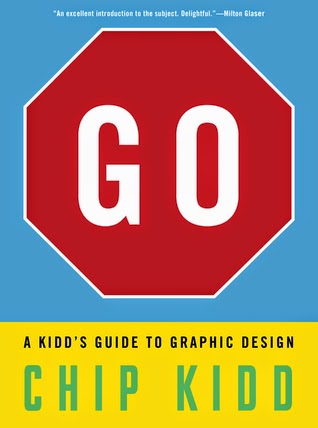
Go: A Kidd's Guide to Graphic Design


Nonfiction Picture Book Wednesday is hosted by Aly at Kid Lit Frenzy. 
Every Wednesday, bloggers link up their non-fiction picture book reviews. Be sure to visit Kid Lit Frenzy and see what great non-fiction books are shared this week!


Title: Go: A Kidd's Guide to Graphic Design
Author: Chip Kidd
Publisher: Workman Publishing Company
Publication Date: October 8th 2013
Genre/Format: Non-Fiction/Picture Book
GoodReads Summary: “An excellent introduction to graphic design through [the author’s] own excellent work. Anyone interested in the subject, including most practitioners, will find it delightful.”—Milton Glaser

Kids love to express themselves, and are designers by nature whether making posters for school, deciding what to hang in their rooms, or creating personalized notebook covers. Go, by the award-winning graphic designer Chip Kidd, is a stunning introduction to the ways in which a designer communicates his or her ideas to the world. It s written and designed just for those curious kids, not to mention their savvy parents, who want to learn the secret of how to make things dynamic and interesting.

Chip Kidd is the closest thing to a rock star in the design world (USA Today), and in Go he explains not just the elements of design, including form, line, color, scale, typography, and more, but most important, how to use those elements in creative ways. Like putting the word go on a stop sign, Go is all about shaking things up and kids will love its playful spirit and belief that the world looks better when you look at it differently. He writes about scale: When a picture looks good small, don t stop there see how it looks when it s really small. Or really big. He explains the difference between vertical lines and horizontal lines. The effect of cropping a picture to make it beautiful or, cropping it even more to make it mysterious and compelling. How different colors signify different moods. The art of typography, including serifs and sans serifs, kerning and leading.

The book ends with ten projects, including an invitation to share your designs at GoTheBook.com

What I Think: I absolutely love this book. I found it fascinating from beginning to end. Design thinking has been on my mind since I participated in Understanding by Design training in July. As I've been talking to more and more people this year about blogging, I find myself telling them that they can set up a simple blog and that I've been working on mine, tweaking the design, moving things around, changing the layout and the theme for a long time now. My blog has evolved over time and I've had fun tinkering with it. I've been working on a website for a couple months now and I haven't made it live yet because I'm not happy with what it looks like and how it represents me just yet. 
     This book helped me see and name some of the thoughts that go through my head as I've worked on my blog and website but I also notice this extends into my writing as well. I saw a great example of varying sentences the other day on Twitter. It showed a version of a paragraph with the sentences basically saying the same thing with sentences of similar structure and then a paragraph with sentences of similar content but with varying sentence structure to show how much more lyrical it is. As writers we design with words and I think that's what makes it an art.
     I honestly could go on and on about this book, what I learned and how it made me think. There were definitely some new design ideas that I'm looking forward to trying. I love that there are ideas here that gave me a concrete way to be creative. So often creativity seems abstract and innate but this book made it feel like it's possible to learn to be creative and I think that might be a relief to some students.
     As a mentor text, I grabbed a snatch of text from the very beginning when the author is talking to the reader. Looking closely at attention grabbers or hooks in non-fiction writing is so much fun. Kidd doesn't disappoint. I really enjoy how he uses 2nd person. It's not very often that 2nd person is used but I think it's a great example of how to hook a reader. I listed a few other books that use 2nd person and/or have great hooks as books that would match well with this.
     One more thing...at the end of this book, there is a great extension for students. After reading about all of the design ideas outlined in the book, Kidd offers some projects that students can try. Bonus!
Read Together: Grades 3 - 12
Read Alone: Grades 4 - 12
Read With: Extreme Earth by Seymour Simon, Locomotive by Brian Floca, Choose Your Own Adventure books
Snatch of Text:
"CONGRAT-
ULATIONS,
you have decided to open 
this book, even though you 
have no idea what it's about 
because the cover doesn't 
tell you much. In fact, the 
cover is weird and seem-
ingly at cross-purposes 
with the message and pos-
sibly even a bit pretentious. 
But you opened it anyway."
Writing Prompts: Complete one of the projects at the end of the book and then write about what you thought about as you completed the project and how you felt about being a designer.
Topics Covered: Integration - Art, Creativity, Intentionality, Purposefulness, Motivation, Belief
I *heart* It:
 

Wednesday, May 14, 2014

Secrets of the Apple Tree


Title: Secrets of the Apple Tree 
Author/Illustrator: Carron Brown And Alyssa Nassner   
Publisher: Kane/Miller Book Publishers 
Publication Date: January 1st, 2014 
Genre/Format: Non-Fiction/Picture Book 
GoodReads Summary: Who lives around the apple tree? Shine a light behind the page and see...

Explore a tree up close and you will find a small world filled with great surprises! From worms wriggling among the roots, to birds nesting high in the branches, the hidden wonders of this amazing habitat are revealed. 
What I Think: We are non-fiction fans at my house but we had some extra fun with this book. Each page shared information about nature found in and around an apple tree. One page would ask a question, almost like a riddle, that got my kids thinking about what we might find when we shined a light through the pages from the back. I used the flashlight app I have on my phone and when I held it up behind the page, we could see the answer to the question and check if they were right. Then, when we turned the page, we could read about what was illuminated with the flashlight. I've never seen a book that worked like this and it was great fun. While we were learning and thinking about nature, we were also super engaged in discovering if we were right.
     Now that the weather is warming up in our neck of the woods, it would be a great time to look closely at a tree and all the creatures that make their home in, on, around and under it. As a mentor text, this would also be a great activity to get kids outside with their writer's notebooks, observing and exploring nature and writing down what they see, smell, hear, feel, and (maybe) taste outside. There is great description - lots of $100 words - in this book that kids could try to incorporate into writing their own riddles. It might be possible to even create their own flashlight drawings or even a lift-the-flap type page or book.
Read Together: Grades Preschool - 1st 
Read Alone: Grades Preschool - 2nd 
Read With: Look Up! by Annette LeBlanc Cate, Over and Under the Snow by Kate Messner, Where In the Wild? by David Schwartz 
Snatch of Text: 
"Slithering, wriggling worms push 
through the soil around the roots.

A tree's roots grow long and deep. 
The roots soak up water from rain, 
which helps to keep the tree alive." 
Reading Strategies to Practice: Activating Background Knowledge, Asking Questions, Making Inferences, Making Connections 
Writing Strategies to Practice: Descriptive 
Writing Prompts: Describe one of the hidden scenes from this book using your five senses to bring the image to life for readers. Take a nature walk, pay attention to details in the world around you, write your own nature-related riddles using descriptive words that incorporate your five senses.
Topics Covered:  Integration - Science
I *heart* It:

Wednesday, February 19, 2014

Non-Fiction Picture Book 10 x 10 2014!

Non-Fiction Picture Book Wednesday

Non-Fiction Picture Book Wednesday is hosted by Alyson at Kid Lit Frenzy but today is also NF PB 10 x 10 hosted by Cathy Mere from Reflect and Refine, Mandy Robek from Enjoy and Embrace Learning and Julie Balen from Write at the Edge! All posts will be linked up at Write at the Edge and then moved over to the jog later in the week! I'm always on the lookout for great non-fiction picture books so I can't wait to check these out!


What books are on your list of 10 non-fiction picture books you can't live without?

It’s Monday! What Are You Reading? 08/28/2023

  It’s Monday! What Are You Reading? From Picture Books to YA!   It's Monday! What are you Reading? is a weekly blog hop hosted by Kelle...