Sunday, December 17, 2017

It's Monday! What Are You Reading? 12/17/2017

It’s Monday! What Are You Reading? From Picture Books to YA! 
It's Monday! What are you Reading? is a meme hosted by Kathryn at Book Date. It is a great way to recap what you read and/or reviewed the previous week and to plan out your reading and reviews for the upcoming week. It's also a great chance to see what others are reading right now...you just might discover your next “must-read” book!
Kellee Moye, of Unleashing Readers, and I decided to give It's Monday! What Are You Reading? a kidlit focus. If you read and review books in children's literature - picture books, chapter books, middle grade novels, young adult novels, anything in the world of kidlit - join us! We love this meme and think you will, too. We encourage everyone who participates to visit at least three of the other kidlit book bloggers that link up and leave comments for them. 

Last Week's Book Adventures:
This week, I was still listening to Bad Feminist and we read more of Knucklehead. We also started Fish In a Tree and it's been good to listen and discuss with my kids.  I also started reading One Last Word by Nikki Grimes and I'm so amazed by how she wrote the poems with a connection to poets of the Harlem Renaissance. She combines her work with theirs...it's fascinating.

Reviewed Last Week:
Click on any picture above to go read my review/post.

Upcoming Book Adventures: 
I'm hoping to finish Bad Feminist this week and get back to Braving the Wilderness. I'm hoping to read more of One Last Word and Fish in a Tree.

This Week's Reviews:
Check back throughout the week to read these reviews/posts. 

So, what are you reading this week? 
Link up below and don't forget to check out other blogs to see what they are reading!
To help build our community and support other bloggers, 
we ask that you comment on at least three other blogs before you. 
Also, if you tweet about your Monday post, don't forget to use #IMWAYR!

Wednesday, December 13, 2017

For the Love of Mentor Texts - Teddy Kuhn


Welcome to another guest post in my series For The Love of Mentor Texts here at Teach Mentor Texts. I love to talk about the power of mentor texts to impact our writing but I'm thrilled to have friends share how they use mentor texts for a fresh perspective. Today I'm excited to welcome Teddy Kuhn to to share how she uses cartoons to inspire students to write.

Would you like to write a guest post for For The Love of Mentor Texts? Just let me know by filling out this simple form. 

*********************************

Elaborating with Cartoons as Mentor Texts

Students can give opinions all day long, usually very strong and sometimes logical opinions.  The point is opinions are natural for humans, we grow up being asked; what’s your favorite? What’s the best? Was that scary? Funny?  So why is it in argumentative essays student writing often feels flat and bland?  If you’re like me, you’ve read thousands of essays where students’ arguments are simple repetitions of an opinion.   And if you’re like me, you write on the paper, “Why?” and “What does this show?” and “Tell me more about this.”


Finally, you get to the end of the stack and instead of being relieved they’re all graded, you’re frustrated because no matter how many times deepening questions have been written, or written “TELL ME MORE”, students just don’t “TELL ME MORE”.  So it finally dawned on me (It took a while) that maybe students don’t know HOW to tell me more or what could be said.  It was time to start really thinking about what elaboration is and what it does because it is more than just more.  


In the early days I began with comic strips straight from the funny pages of the newspaper.  I gave kids a copy, let them read, listen to some giggles and asked “Is this funny?”


We practiced this a lot, with a lot of cartoons, it’s quick and students like it.  Best of all it did help with their writing.  However, with Common Core the standards for argumentative writing became more rigorous and more defined than they previously had.  I needed to step my strategy up, because even though it helped students see what elaboration looks like, it didn’t help them understand what it truly does.  


That’s when George Hillock, Jr’s book Teaching Argument Writing truly saved the day, week, unit, all of it.  This is really a remarkable book! It has become one of my staple professional development books.  Hillocks helped me really understand the components of argument writing and how they work together.  The book helped solidify what I knew, taught me the new language of CCSS and gave me the tools to actually teach it.  LOVE, LOVE this book, find a copy!


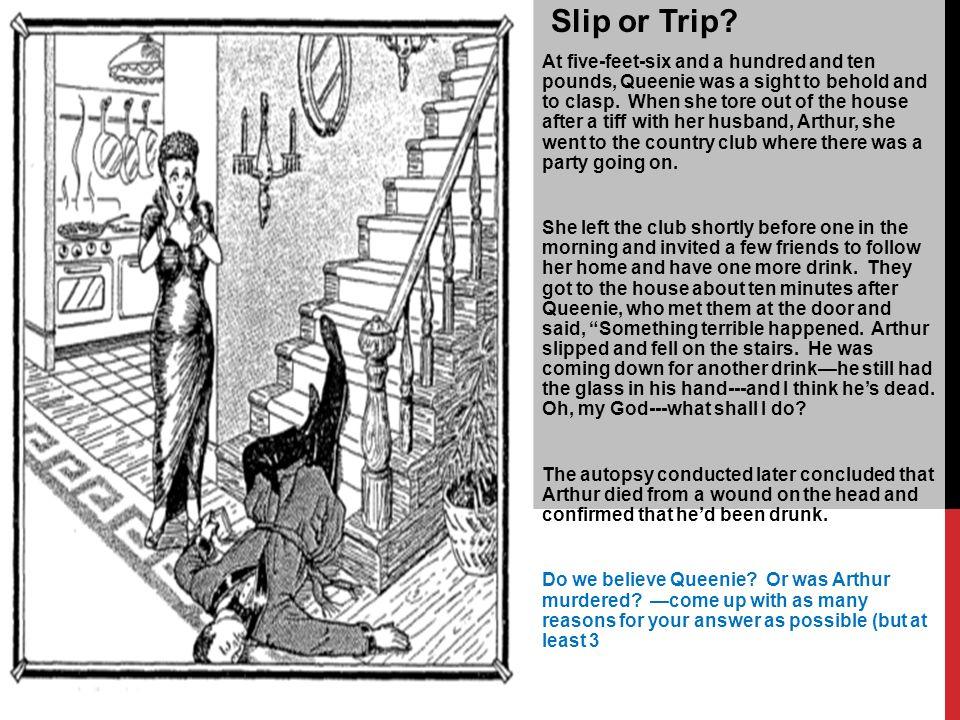
Anyways, Hillocks suggests using crime scene cartoons! (Is there anything more satisfying than finding out you were on the right track??) I use Lawrence Treat’s Crime and Puzzlement, each cartoon in this book comes with a brief story that includes more clues.  Share it with students and simply ask, “What happened? Was this an accident?” As students begin developing theories guide them to the picture and ask, “How can you tell?” This time when students are asked for more, I was really asking for a comparison. Students are really answering, “How does this compare to what you know about the world?”


Suddenly their answers will include ideas about how this evidence shows it couldn’t have been an accident because it would be impossible to occur naturally.  And, almost like magic, students are answering, “why?” and “telling me more” using logic, warrants and reasoning, even if they don’t know it yet!  I’ll later use these cartoons and conversations to define the key elements of argument writing.  Students are more likely to transfer this elaboration when they know exactly what that element is, does and sounds like.


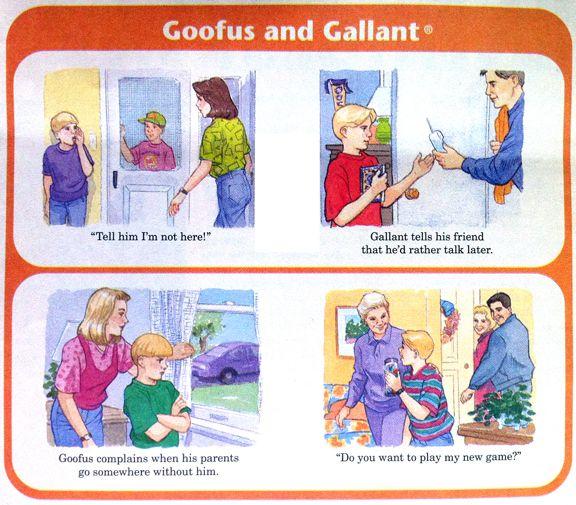
Unfortunately, if you do teach younger students these cartoons aren’t appropriate.  I recommend the classic Goofus and Galant cartoons. Ask students which character is doing the right thing and which is doing the wrong.  Then, to encourage elaboration and reasoning, ask students, “How do you know that’s the right thing to do?” Students’ answers will include their experiences and values in comparison with the characters, so even at a young age the elaboration and reasoning muscles are being strengthened!


I recently discovered Zen Pencils and love how they are taking inspirational or thought-provoking quotes and turning them into cartoons. It really brings them to life and helps give readers another lens to consider as they discuss. If you aren't familiar with this site, I definitely recommend it as well.


A big thank you to Teddy for taking the time to share her love of mentor texts!

Sunday, December 10, 2017

It's Monday! What Are You Reading? 12/11/2017

It’s Monday! What Are You Reading? From Picture Books to YA! 
It's Monday! What are you Reading? is a meme hosted by Kathryn at Book Date. It is a great way to recap what you read and/or reviewed the previous week and to plan out your reading and reviews for the upcoming week. It's also a great chance to see what others are reading right now...you just might discover your next “must-read” book!
Kellee Moye, of Unleashing Readers, and I decided to give It's Monday! What Are You Reading? a kidlit focus. If you read and review books in children's literature - picture books, chapter books, middle grade novels, young adult novels, anything in the world of kidlit - join us! We love this meme and think you will, too. We encourage everyone who participates to visit at least three of the other kidlit book bloggers that link up and leave comments for them. 

Last Week's Book Adventures:
I'm still listening to Bad Feminist and it's so so so good. We've been reading Jon Scieszka's Knucklehead as a family and we crack up every night. It's so funny. 

Reviewed Last Week:
I was on a podcast!
Thanks to Renee Powers for interviewing me for her Wild Cozy Truth podcast.
I also blogged about the The Danger of a White Story over at Story Exploratory.
Click on any picture above to go read my review/post.

Upcoming Book Adventures: 
This week I'll be listening to Bad Feminist and possibly diving into a reread of Dash and Lily's Book of Dares. It always puts me into the holiday spirit!

This Week's Reviews:
Check back throughout the week to read these reviews/posts. 

So, what are you reading this week? 
Link up below and don't forget to check out other blogs to see what they are reading!
To help build our community and support other bloggers, 
we ask that you comment on at least three other blogs before you. 
Also, if you tweet about your Monday post, don't forget to use #IMWAYR!

The Danger of a White Story

I was born in 1980 in Lake Forest, Illinois to wonderful parents. My dad is Irish and Welsh and my mom is Guatemalan. Growing up, I spent time with both sides of my family, spoke in English and Spanish, painted with my Gramma and played cards with my Mamita. I loved both sides of my family and they loved me.


But the town I grew up in didn’t reflect me or my family as a whole.


I grew up in a town where the population was 98.6% white. People around me lived in mansions, drove shiny, new cars, and wore expensive clothes but I didn’t. Books were the one place where I felt like enough. I could walk into the library and check out as many books as I wanted and they were the same books the other kids were reading. The library leveled the playing field for me. At the same time, It was years and years before the We Need Diverse Books campaign so I read books by Judy Blume, Beverly Cleary, and Roald Dahl. I didn’t see my Latinx heritage represented in books I read.

I talked about my story and how books saved me on the Wild Cozy Truth podcast with Renee Powers this week. I'm so thankful for all the books I had access to growing up. But even though connecting with books helped me to become who I am today, they still contributed to a fractured identity for me.


This is the danger of a white story.


I hope by now everyone has seen Chimamanda Ngozi Adichie's Ted Talk The Danger of a Single Story. If you haven't, please go watch it. I've blogged about it before and how we have to be conscious of how harmful it can be to assume things. Chimamanda points out that it’s too easy to assume things about a large group of people from just one experience or story with one person.


I grew up with a white story all around me. In the community I lived in, in the books I read, in the media I consumed. It’s not shock that I ended up not identifying with my Latina side. It wasn’t until We Need Diverse Books that I started to unravel years and years of being ashamed of being Latina. I spent a month blogging about this very topic. It was a really hard month as I faced things I wasn’t proud of and forced myself to be introspective.


There’s a danger in a white story.


I’m not alone. I’ve heard of students who deny their Latinx identity and attempt to disassociate with their ethnicity. I’ve had a student tell me she wished she had a white girl’s name like mine. I’ve seen my own son raise his hands in excitement that his skin is lighter than his brother’s when we talked about the injustices people might face because of their skin color.


This danger of a white story is why we need to continue to work for diversity in books and other media. We have come along way since the 80’s when I grew up but we still have work to do.


Chad Everett wrote a piece called There Is No Diverse Book where he talks about how we have to examine our use of the word "diverse". He points out that no one book can be diverse. The very definition of diversity implies that there have to be a variety in a range of different things. One book might have a diverse cast of characters. A group of books might represent people from different ethnicities. But the word diverse does not mean non-white.


Chad shares how readers can move along a continuum in terms of what they read. He cites Dr. Rudine Sims-Bishops’ work on the importance of access to books that are Mirrors, Windows, and Sliding glass doors (I mention her work in the podcast but failed to cite her and I apologize for this.). He also points out that while a reader can move along the continuum, it’s important to read widely on those points on the continuum. Reading one book with characters of a certain race, gender, sexual orientation, religion, ability, etc., is not enough. That’s the danger of a single story.


Chad also explains, "The word diverse as it is currently used centers heteronormative whiteness as the default." There are a lot of reasons for why whiteness is the default that I don’t have to outline here. It’s imperative that we - as readers, educators, parents, humans - reflect on what we consider the default as we grow the representation of diversity in books and in the books we share with others.


It’s the danger of a white story.


I know all too well what it feels like to live in a white story, to exist thinking that white is the norm. I still struggle with not feeling like enough. I wonder why I’m not included. I question whether my voice matters. And not only that, I find myself dealing with these thoughts in different spaces. I don’t feel like I fit in anywhere.


We have to stop defaulting to white as the norm. Each reader deserves to see themselves in the books they read and they deserve the opportunity to read widely beyond themselves.

In this video interview with Dr. Rudine Sims-Bishop, specifically when she talks about cultural authenticity, she shares ideas for how to look critically at texts we read and share. I urge you to take some time to think about the books you are reading and other media you are consuming and look for diversity in the range of texts you read.

Be aware of the danger of a white story. 

Wednesday, December 6, 2017

For The Love of Mentor Texts - Beth Sanderson


Welcome to another guest post in my series For The Love of Mentor Texts here at Teach Mentor Texts. I love to talk about the power of mentor texts to impact our writing but I'm thrilled to have friends share how they use mentor texts for a fresh perspective. Today I'm excited to welcome Beth Sanderson to share how she finds and organizes mentor texts.

Would you like to write a guest post for For The Love of Mentor Texts? Just let me know by filling out this simple form. 

*********************************

Finding and Organizing Great Mentor Texts


Summer is a time to relax, recharge and read. But teachers never really take the summer off. Twitter and Facebook are filled with posts by teachers sharing a “must read” book or a noteworthy article. If you are like me, you clip articles and save posts, thrilled to add to your classroom mentor text collection.


When September rolls around, however, who has the time to sift through the list of arbitrary articles clipped or Facebook posts saved?


Taking a little time during the summer to consider the organization of your mentor texts will yield a system that puts texts at your fingertips when you need them.


Here are some ideas (along with a few good mentor texts) for organizing:


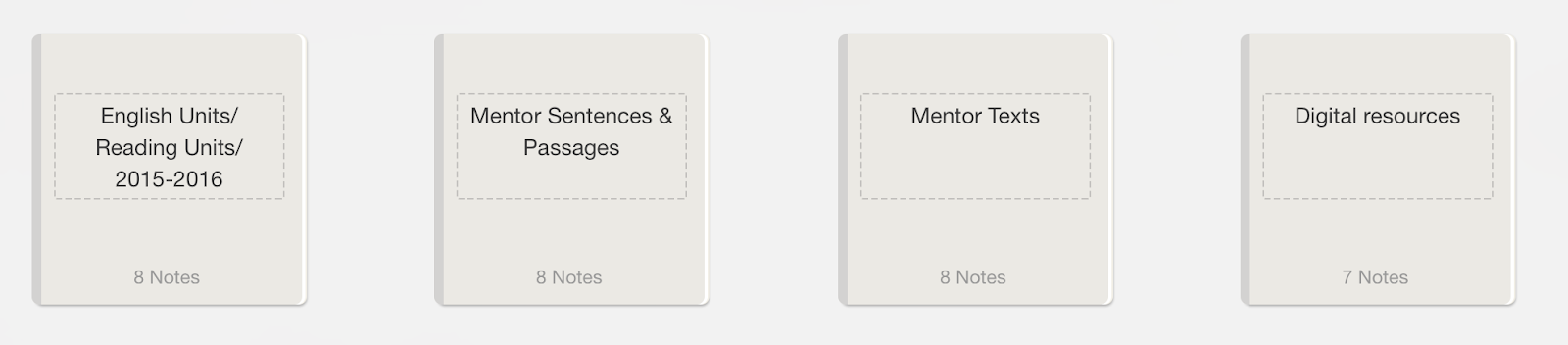
1. Select one or two locations as a repository for written mentor texts. The single most effective step I have taken to make mentor texts easier to find is selecting two platforms to house my texts. Evernote, a digital organization tool, and Google folders have simplified my teaching world.


Evernote (or its kin Microsoft OneNote) allows you to create digital notebooks filled with individual notes. Evernote is accessible from any device and once installed, is quick to open from anywhere. When you open my mentor text notebook, you will find lists of articles, stories or links organized by genre and/or intended use. Evernote allows you to “clip” or save PDFs from the web into any notebook. Therefore, if I find a digital article I want to save, I immediately file it in the correct notebook.


For example, right now I am revisiting the joy of the late Amy Krouse Rosenthal’s Encyclopedia of an Ordinary Life and Textbook. Ordinary Life is a unique memoir written in encyclopedia form and Textbook is her thinking organized into textbook chapters. Both books are written for adults but there are plenty of pages appropriate for the classroom. Her work offers students a whole new world of creative writing. Rosenthal’s website www.whoisamy.com has a complete PDF of Ordinary Life uploaded! In Evernote, I have added pages of the text to several genre notes so I remember the text can be used in more than one way.


If you use Google folders, consider creating mentor text folders by teaching unit or genre to share with your teaching team and spread the wealth.

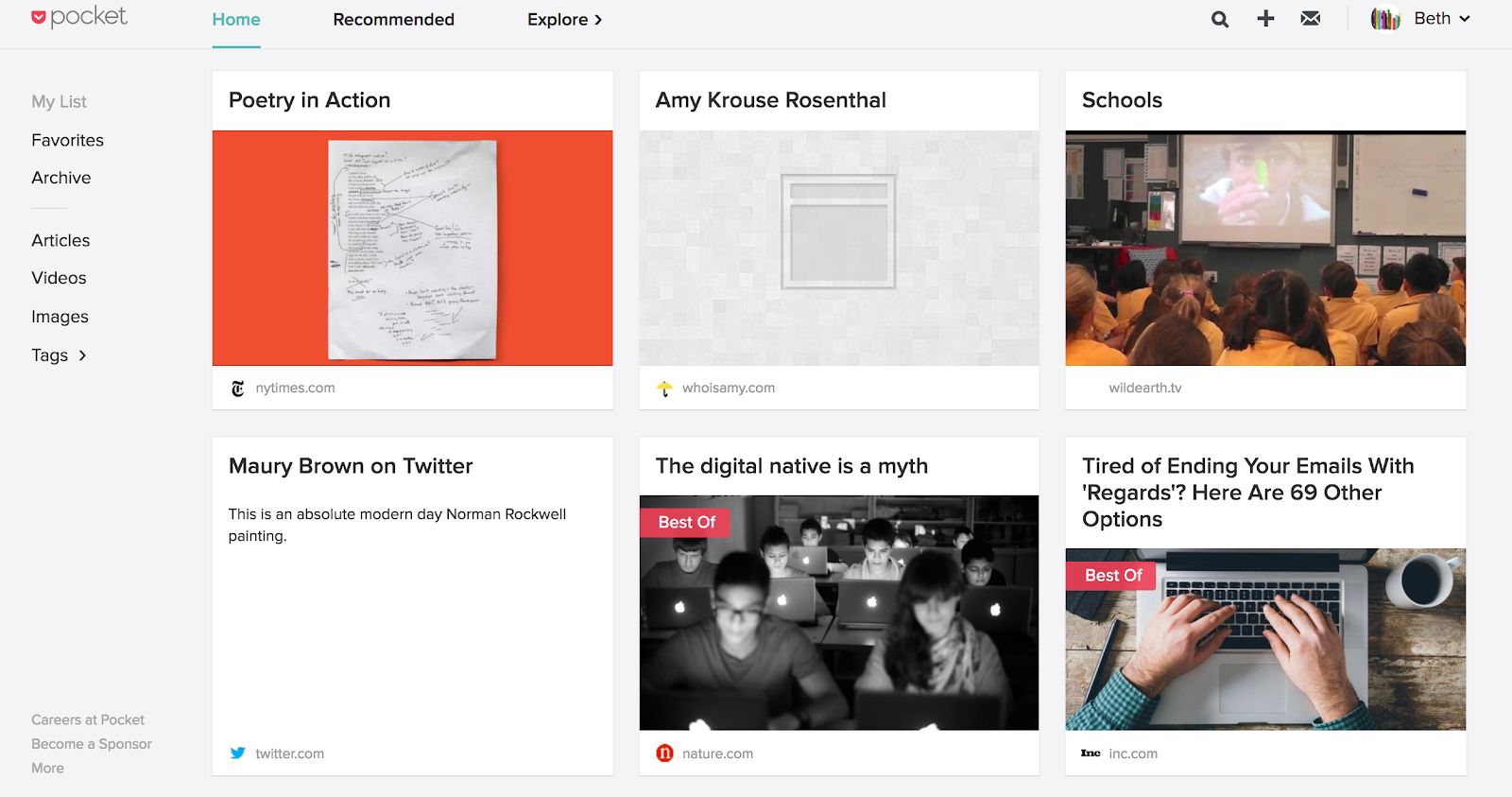
2. Employ apps that ease article “clipping”. Technology has made saving mentor texts much easier. In addition to clipping articles through Evernote, I use the app Pocket. Pocket is found in the app store or at https://getpocket.com. Pocket allows you to grab articles, videos, images, charts and more from any site. Opening my saved Pocket folder always sparks a note of creativity as I scroll through the gems I may have clipped on the fly while on Twitter or a news site.


In Pocket, you can add tags to saved items, star favorites or sort by type of media (article, video or image). One step worth taking is copying the links for mentor texts and adding them to a word or Google document listed by genre or lesson plan. Otherwise, Pocket will serve as a creative treasure chest like your grandparent’s attic.


3. Make a YouTube channel for videos. Inspiring videos or ads can be the perfect addition to a class lesson. Rather than just writing down a URL or inserting the video in a power point, consider creating a YouTube channel. I can’t believe how long it took me to take this step but now I have nicely organized playlists on my channel built to match my classroom use. The channel can be private or public. When you find a video you want to save, simply hit the plus sign (+) when you are logged in and YouTube allows you to create or select a playlist for the addition.


Some of my favorite videos are:


4.  Have a set of folders, by genre, for hard copies of articles.  I read several physical newspapers and magazines weekly. Reading physical papers allows one to savor stories and find treasure. Additionally, I often clip infographs and small items that I would miss scanning The New York Times online. One recent gem was the cover story in the NYT Review of Books about poetry revision that included edited pages by poets such as Billy Collins.


However, a pile of clipped articles can quickly become a mess. Consider creating a set of folders by genre to house the clips. Then, when you need a piece, finding just the right article is a snap.


5. When creating units or lesson plans, build a playlist of mentor texts on one page. To make lesson plans as flexible and responsive as possible, I like to have a number of mentor texts to personalize the learning experience and help each student find a way into a skill or topic. During lesson planning, consider creating a Word or Google document with your objective and a long list of links to videos, articles, books or stories to serve as mentors for students. Finally, place the “playlist” document in the appropriate Evernote or Google Drive folder for easy access in future units.


As summer winds down, I am reading away. Having a store of strong, well-organized mentor texts has changed my teaching. I can’t wait to see what I find!

Beth Sanderson is an 8th grade English teacher and instructional leader at Swanson Middle School in Arlington, Virginia. When not teaching, Beth goes everywhere with a book in her hand. Her classroom has been featured in The Washington Post Sunday Magazine, the Book Club for Kids podcast and NEA Today. Find her on Twitter at @bbsand.

A big thank you to Beth for taking the time to share her love of mentor texts!

Sunday, December 3, 2017

It's Monday! What Are You Reading? 12/4/2017

It’s Monday! What Are You Reading? From Picture Books to YA! 
It's Monday! What are you Reading? is a meme hosted by Kathryn at Book Date. It is a great way to recap what you read and/or reviewed the previous week and to plan out your reading and reviews for the upcoming week. It's also a great chance to see what others are reading right now...you just might discover your next “must-read” book!
Kellee Moye, of Unleashing Readers, and I decided to give It's Monday! What Are You Reading? a kidlit focus. If you read and review books in children's literature - picture books, chapter books, middle grade novels, young adult novels, anything in the world of kidlit - join us! We love this meme and think you will, too. We encourage everyone who participates to visit at least three of the other kidlit book bloggers that link up and leave comments for them. 

Last Week's Book Adventures:
Ack! I did a lot of writing last week but didn't get to much reading unfortunately EXCEPT I did start listening to Roxanne Gay's Bad Feminist and it's so so so good.

Upcoming Book Adventures: 
I'm excited to listen to more of Bad Feminist and get back to reading Braving the Wild and Aru Shah and the End of Time!

This Week's Reviews:
Check back throughout the week to read these reviews/posts. 

So, what are you reading this week? 
Link up below and don't forget to check out other blogs to see what they are reading!
To help build our community and support other bloggers, 
we ask that you comment on at least three other blogs before you. 
Also, if you tweet about your Monday post, don't forget to use #IMWAYR!

It’s Monday! What Are You Reading? 08/28/2023

  It’s Monday! What Are You Reading? From Picture Books to YA!   It's Monday! What are you Reading? is a weekly blog hop hosted by Kelle...